Maruti Suzuki Gujarat In-Plant Railway Siding: World’s First Modal Shift Carbon Credit Project
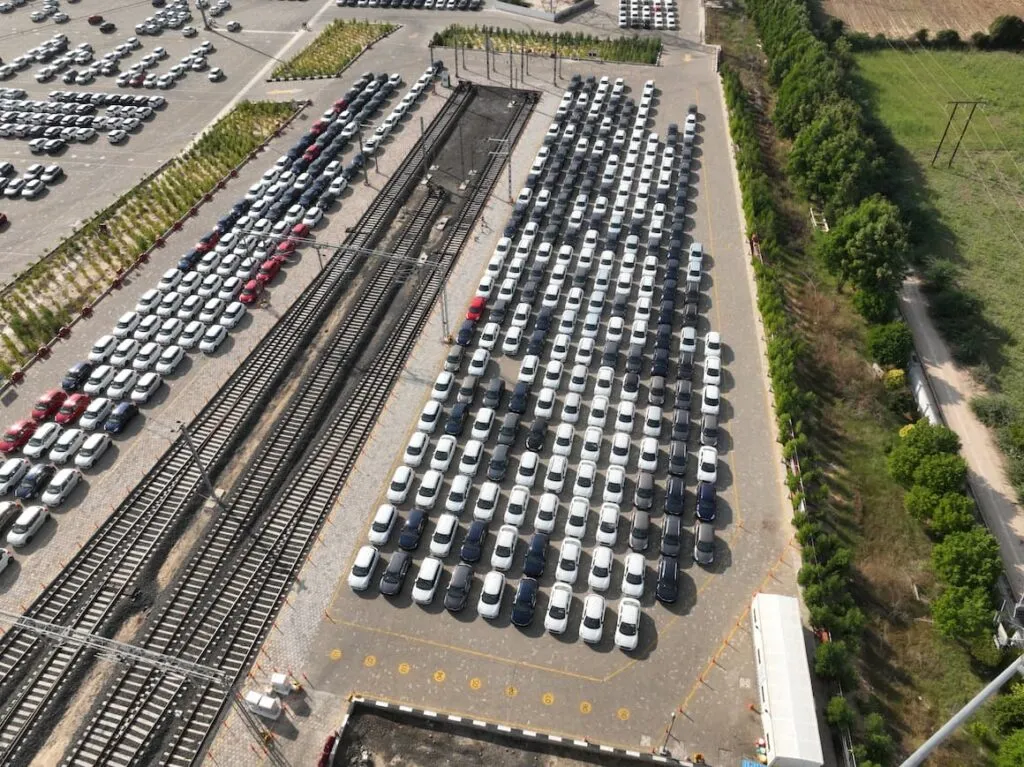
Maruti Suzuki India Limited (MSIL) has achieved a global sustainability milestone by registering its Gujarat in-plant railway siding as the world’s first Modal Shift Transportation project under the Verified Carbon Standard (VCS) program. This recognition, granted by Verra, the world’s largest voluntary carbon credit registry, marks a significant shift in how automotive logistics can contribute to climate action.
Global Benchmark in Sustainable Logistics
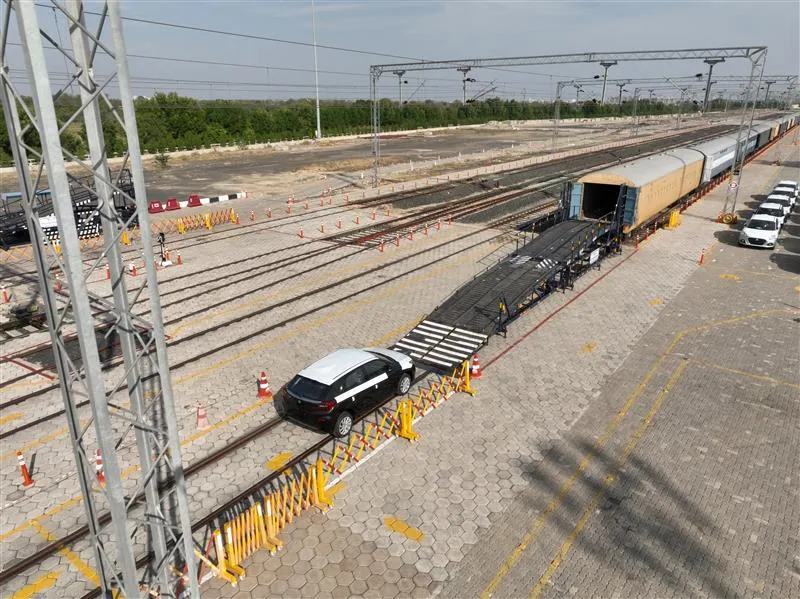
The registration of the Gujarat facility under the VCS program highlights a successful transition from road-based vehicle dispatches to rail transport. By leveraging the inherent efficiency of the railway network, Maruti Suzuki is significantly reducing the carbon footprint of its logistics operations.
Key Highlights of the Project
- Carbon Emission Reduction: The project is designed to reduce approximately 1.7 Lakh tonnes of CO2 emissions over a 10-year crediting period (FY 2023-24 to FY 2032-33).
- Carbon Credits: Following independent verification, Verra will issue 1.7 Lakh carbon credits to Maruti Suzuki.
- Methodology: Emission reductions are quantified using the AM0090 methodology, prescribed under the Clean Development Mechanism (CDM) of the United Nations Framework Convention on Climate Change (UNFCCC).
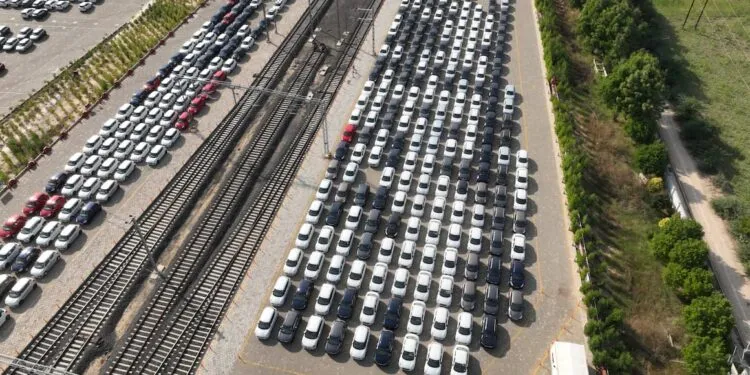
- Operational Scale: Since its commencement in March 2023, the Gujarat railway siding has dispatched more than 6 lakh vehicles.
Strategic Infrastructure and National Alignment
The development of in-plant railway sidings is a core component of Maruti Suzuki’s strategy to enhance operational efficiency while meeting environmental responsibilities.
The Gujarat and Manesar Facilities
The Gujarat in-plant railway siding, located at the Hansalpur facility, was inaugurated in March 2024 by the Prime Minister of India under the GatiShakti program. Following this success, the company inaugurated India’s largest automobile in-plant railway siding at its Manesar facility in June 2025.+1
These projects contribute directly to several United Nations Sustainable Development Goals (SDGs):
- SDG 3: Good Health and Well-being
- SDG 8: Decent Work and Economic Growth
- SDG 13: Climate Action
Impact on Environmental Responsibility
According to Mr. Hisashi Takeuchi, Managing Director & CEO of Maruti Suzuki India Limited, this milestone reinforces the company’s commitment to India’s goal of achieving net zero emissions. Beyond carbon reduction, the modal shift helps in:
- Reducing congestion on national highways.
- Lowering overall fossil fuel consumption in the logistics chain.
- Setting a new industry benchmark for sustainable supply chain management.
Frequently Asked Questions (FAQs)
What is a Modal Shift Transportation project? It refers to the transition of transporting goods (in this case, vehicles) from one mode of transport to another that is more sustainable, such as moving from road transport to rail transport to reduce emissions.
How many carbon credits will Maruti Suzuki earn from the Gujarat project? The project is expected to generate approximately 1.7 Lakh carbon credits over a 10-year period from FY 2023-24 to FY 2032-33.
Who is the verifying authority for these carbon credits? The project is registered with Verra, a global nonprofit that manages the Verified Carbon Standard (VCS) Program, the world’s leading voluntary greenhouse gas crediting program.
Which methodology is used to calculate the emission savings? The savings are quantified under the AM0090 methodology, which is prescribed by the Clean Development Mechanism (CDM) of the UNFCCC.
You can add more to this story by commenting below.