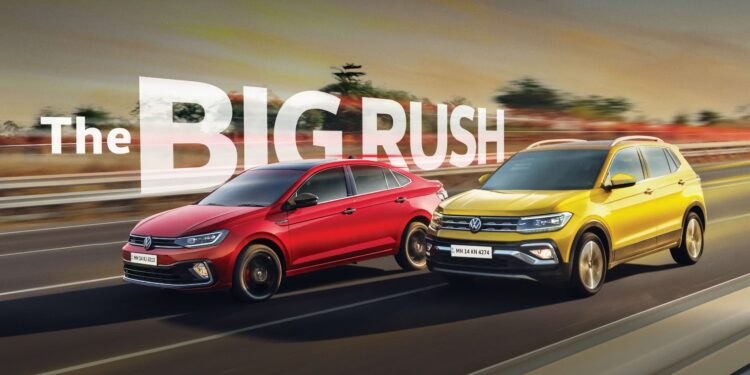
Volkswagen Extends Full GST 2.0 Benefits, Cars Get Cheaper
Volkswagen India has officially confirmed that it will pass on the complete benefits of the new GST 2.0 reforms to its customers, making its entire lineup more affordable. The revised prices will be effective from September 22, 2025. This move follows the government’s decision to simplify the tax structure, which has resulted in a flat 40% GST slab for larger premium sedans and SUVs, eliminating the previous higher rates that included a cess component.
The company has announced significant price reductions across its portfolio, with a maximum benefit of up to ₹3.27 lakh. This strategic move, timed ahead of the festive season, is aimed at strengthening Volkswagen’s competitive edge in the Indian market.
New Prices and Benefits on Volkswagen Models
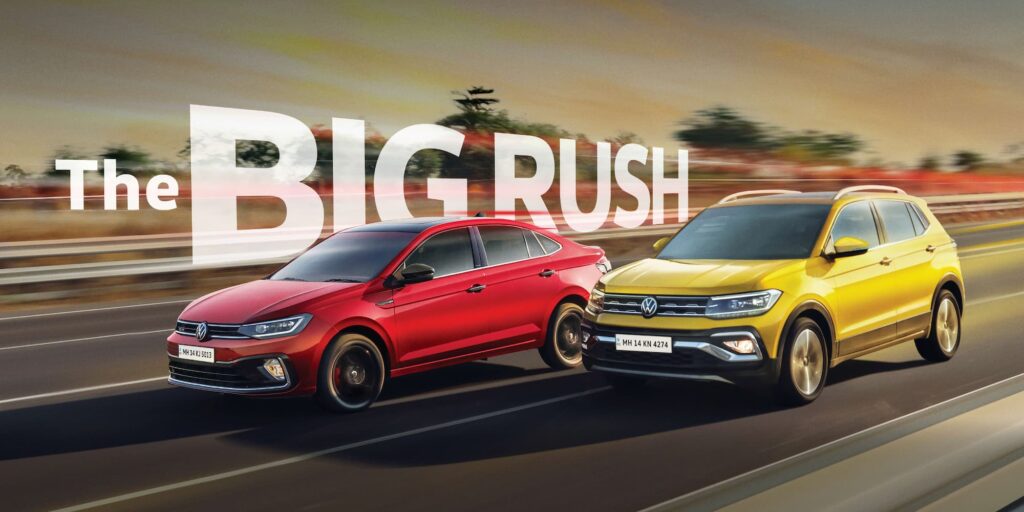
Under the new GST regime, the Volkswagen Virtus, Taigun, and Tiguan R-Line are all set to become cheaper.
- The Volkswagen Virtus sedan will see a price reduction of up to ₹66,900.
- The Volkswagen Taigun compact SUV will get cheaper by up to ₹68,400.
- The flagship Volkswagen Tiguan R-Line will receive the highest benefit, with a price cut of up to ₹3,26,900.
Volkswagen: Price Reduction & New Prices (Ex-showroom Delhi)
| Model | Variant | Old Ex-Showroom Price | New Price (after GST benefit) | Maximum Price Reduction |
| Volkswagen Virtus | GT Plus Sport DSG | ₹19,39,900 | Est. ₹18,73,000* | Up to ₹66,900 |
| Volkswagen Taigun | GT Plus Sport DSG | ₹22,61,000 | Est. ₹21,92,600* | Up to ₹68,400 |
| Volkswagen Tiguan | R-Line 2.0L TSI | ₹48,99,900 | Est. ₹45,73,000* | Up to ₹3,26,900 |
Note: The new prices are estimated based on the maximum price reduction and the old ex-showroom prices mentioned in the provided sources. The actual final price for each variant may vary.
On-Road Prices of Volkswagen Cars to Reduce After New GST Cut
The new GST structure will have a positive impact on the on-road prices of Volkswagen vehicles. While the tax on larger vehicles is now a flat 40% (up from 28%), the removal of the compensation cess, which previously ranged up to 22%, will bring down the overall tax burden. This directly reduces the ex-showroom price, which in turn lowers other on-road costs such as road tax and insurance, providing a greater overall benefit to the customer.

FAQs on Volkswagen GST Price Reduction
1. Why are Volkswagen cars getting a price cut? Volkswagen is passing on the full benefits of the GST 2.0 reforms, which have simplified the tax structure for passenger vehicles, leading to an overall reduction in prices.
2. When will the new prices for Volkswagen cars be effective? The revised prices will be effective from September 22, 2025.
3. Which Volkswagen models are getting a price cut? The price reductions apply to the Volkswagen Virtus, Taigun, and Tiguan R-Line.
4. What is the maximum GST benefit on a Volkswagen car? The maximum GST benefit is up to ₹3,26,900, applicable on the Tiguan R-Line.
5. How much cheaper is the Volkswagen Taigun after the GST cut? The Volkswagen Taigun will see a price reduction of up to ₹68,400.
6. What is the price benefit on the Volkswagen Virtus? The Volkswagen Virtus will have a price benefit of up to ₹66,900.
7. Does the GST reduction apply to all cars in India? No, the new GST structure benefits specific categories. Small cars get a significant reduction to 18%, while larger cars like the Virtus and Taigun are taxed at a flat 40% with no cess, which also results in a price cut.
8. What was the old GST rate on cars like the Virtus and Taigun? Previously, cars like the Virtus and Taigun attracted 28% GST plus an additional cess, bringing the total tax to as high as 45%.
9. What is the new GST rate for Volkswagen’s portfolio? Volkswagen’s larger vehicles, including the Virtus and Taigun, will now be taxed at a flat 40% without any additional cess.
10. Will the price cut affect the on-road price? Yes, the on-road price will be lower as the reduced ex-showroom price will also lead to a decrease in road tax and insurance costs.
11. Is the Volkswagen Tiguan R-Line a part of this price reduction? Yes, the Tiguan R-Line will have the largest price cut, with a benefit of up to ₹3,26,900.
12. Why did the government introduce GST 2.0? The GST 2.0 reforms were introduced to simplify the tax structure by reducing the number of slabs and removing the cess component.
13. How does this GST change benefit Volkswagen? For Volkswagen, whose portfolio consists of premium sedans and SUVs, the GST reforms directly translate to higher affordability for its customer base, helping the brand stay competitive.
14. Are there any other offers from Volkswagen besides the GST benefit? Yes, Volkswagen has also announced additional festive offers that provide further savings on select variants.
15. Is the price cut applicable to all variants of the Taigun and Virtus? The benefits vary depending on the specific variant and configuration.
16. What is the impact on the luxury car segment? Luxury cars and large SUVs are now taxed under a flat 40% slab, simplifying taxation and providing clarity for customers.
17. How does this benefit compare to other car manufacturers? Volkswagen joins other automakers like Skoda, who have also announced significant price cuts to pass on the GST benefits to customers.
18. Will the price cut boost sales for Volkswagen? Volkswagen expects the updated pricing to strengthen demand for its models, especially with the festive season approaching.
19. What is the “cess” that has been removed? Cess was an additional tax levied on certain goods and services, including cars, to raise funds for specific purposes. This has now been eliminated for many vehicle categories.
20. Is the price reduction a permanent change? Yes, the price change is a result of a permanent GST reform and is not a limited-time offer.