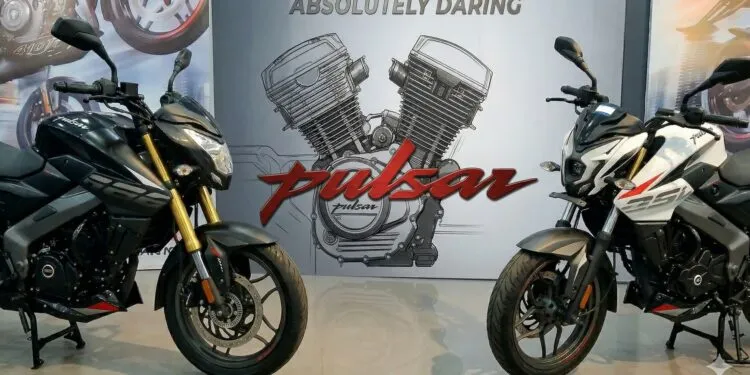
Bajaj Auto is reportedly preparing to update its flagship sub-500cc portfolio, specifically the Pulsar NS400Z and the Dominar 400, with a revised engine displacement.
The primary driver behind this move isn’t a lack of performance, but rather the intricacies of the Indian taxation system. Currently, motorcycles with displacements exceeding 350cc fall into a higher GST tax slab. To keep these machines competitive and accessible, Bajaj is downsizing the displacement to just under the 350cc threshold.
The Strategic Downsizing: Why 350cc?
Bajaj has been absorbing the higher GST costs for some time to maintain the aggressive pricing of the NS400Z and Dominar 400. However, to ensure long-term sustainability without passing significant hikes to the consumer, the company is pivoting toward a sub-350cc platform.
Interestingly, sources indicate that Bajaj will retain the current nomenclature. This means that even with a 350cc heart, the bikes will likely still carry the NS400Z and Dominar 400 branding to preserve their market positioning and brand equity.
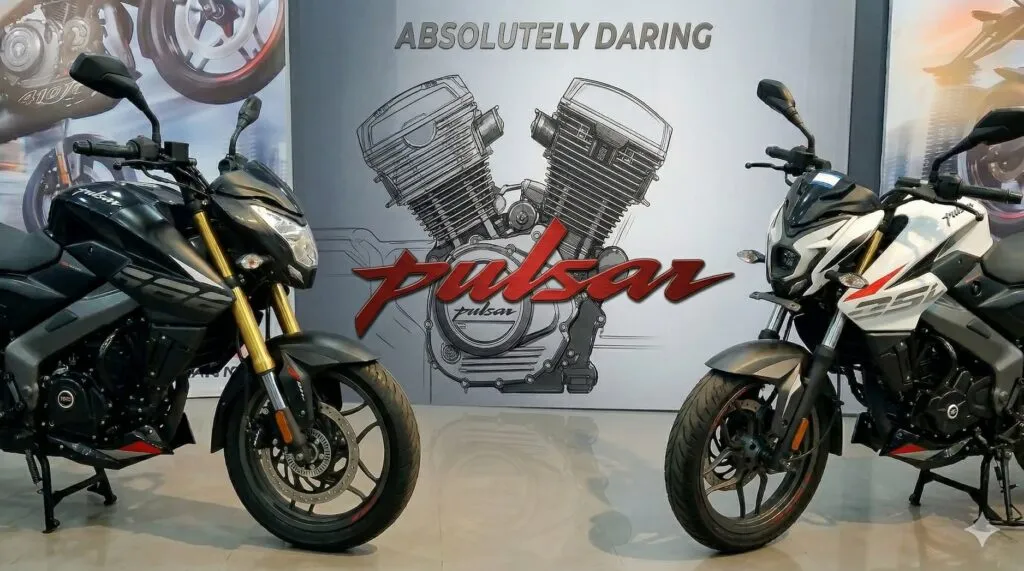
2026 Bajaj Pulsar 350cc Engine Specifications
Leaked technical documents have provided a comprehensive look at what this new engine brings to the table. While the displacement has dropped by roughly 24cc, the engine remains a high-performance, liquid-cooled unit.
| Parameter | Specification |
| Engine Type | 4 Stroke, Single cylinder, Liquid cooled |
| Displacement | 349.13 cc |
| Bore | 89 mm |
| Stroke | 56.1 mm |
| Max. Net Power | 29.86 kW (40.6 PS) @ 9000 rpm |
| Max. Net Torque | 33.2 Nm @ 7500 rpm |
| Idling Speed | 1550 ± 150 rpm |
| Ignition System | DC |
| Spark Plug Quantity | 1 |
| Spark Plug Gap | 0.8 – 0.9 mm |
| Clutch | Wet multiplate Assist & Slipper (A&S) clutch |
| Lubrication | Wet Sump Forced Lubrication |
| Gearbox | 6-speed sequential |
Performance Comparison: New vs. Old
The move from the previous 373cc engine to the new 349.13cc unit does result in a slight dip in performance figures, though Bajaj has worked to keep the losses minimal.
- Bore and Stroke: The engine retains the same 89 mm bore as the current model. The reduction in displacement comes entirely from the stroke, which has been shortened from 60 mm to 56.1 mm.
- Power Output: The new engine produces 40.6 PS, a decrease of approximately 2.4 PS compared to the 43 PS of the outgoing model.
- Torque Output: Peak torque is now rated at 33.2 Nm, down by 1.8 Nm from the previous 35 Nm.
While these numbers are lower on paper, the delivery remains focused on the higher rev range, with peak power still arriving at 9000 RPM.
Features and Design Consistency
Despite the engine change, the 2026 iterations of the Pulsar NS400Z and Dominar 400 are expected to remain largely identical in terms of aesthetics and equipment. Bajaj is leaning on the “if it isn’t broken, don’t fix it” philosophy for the chassis and electronics.
Owners can expect the continuation of premium hardware including:
- Suspension: Upside Down (USD) front forks.
- Braking: Disc brakes at both ends with sintered pads and dual-channel ABS.
- Frame: The signature perimeter frame for agile handling.
- Technology: Riding modes and a Bluetooth-enabled instrument cluster with turn-by-turn navigation.
The color palettes are also expected to carry over from the current models, ensuring the visual identity of these popular streetfighters and tourers remains intact.
Pricing and Expected Launch
Bajaj is likely to maintain the current price tags for the updated 350cc models. By moving to the lower GST bracket, the company can offset previous cost increases without needing to hike the Ex-showroom price, effectively passing the tax savings onto the customer to keep the price stable.
The official launch is anticipated within the coming weeks. This engine update is also expected to influence other bikes in the ecosystem; reports suggest a similar 350cc shift for the 2026 Triumph Speed 400.
Frequently Asked Questions (FAQs)
Why is Bajaj reducing the engine size of the Pulsar and Dominar? The primary reason is to comply with Indian GST regulations. Motorcycles with engines larger than 350cc are subject to a higher tax slab. By reducing the displacement to 349.13cc, Bajaj can avoid these extra costs and keep the motorcycles competitively priced.
Will the bikes be renamed to Pulsar 350 or Dominar 350? Current reports indicate that Bajaj will keep the existing names, NS400Z and Dominar 400, despite the reduction in actual engine displacement.
How much power is lost with the new 350cc engine? The new engine produces 40.6 PS and 33.2 Nm of torque. This is a reduction of 2.4 PS and 1.8 Nm compared to the previous 373cc engine.
Are there any major changes to the design or features? No, the design, colors, and features like USD forks, dual-channel ABS, and riding modes are expected to remain the same as the current 400cc models.
When can we expect these updated models to be available? The launch is expected to take place in the coming weeks of 2026
You can add more to this story by commenting below.