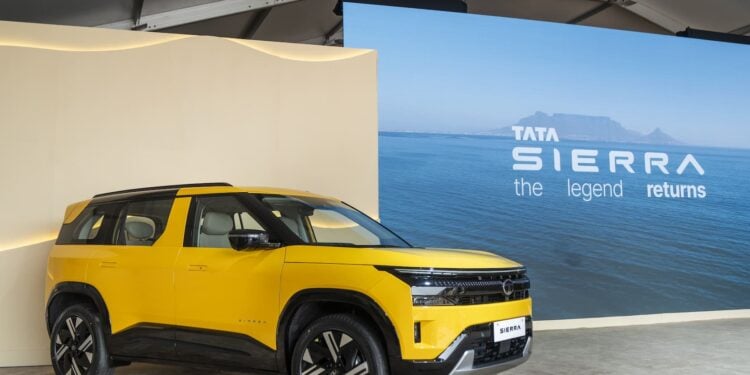
The Legend Returns: An In-Depth Look at the All-New Tata Sierra (2025)
A Timeless Icon Reborn: Bridging Heritage and the Future
Few names in India’s automotive history evoke the deep sense of nostalgia, aspiration, and adventurous spirit as the Tata Sierra. Launched in 1991, the original Sierra was a landmark vehicle, marking Tata Motors’ entry into the passenger vehicle segment and standing as India’s first indigenously designed and produced off-road Sport Utility Vehicle (SUV). It was a symbol of rugged individuality and luxury, defined by its unique three-door body style and expansive fixed rear glass—often called the Alpine window.
Tata Sierra
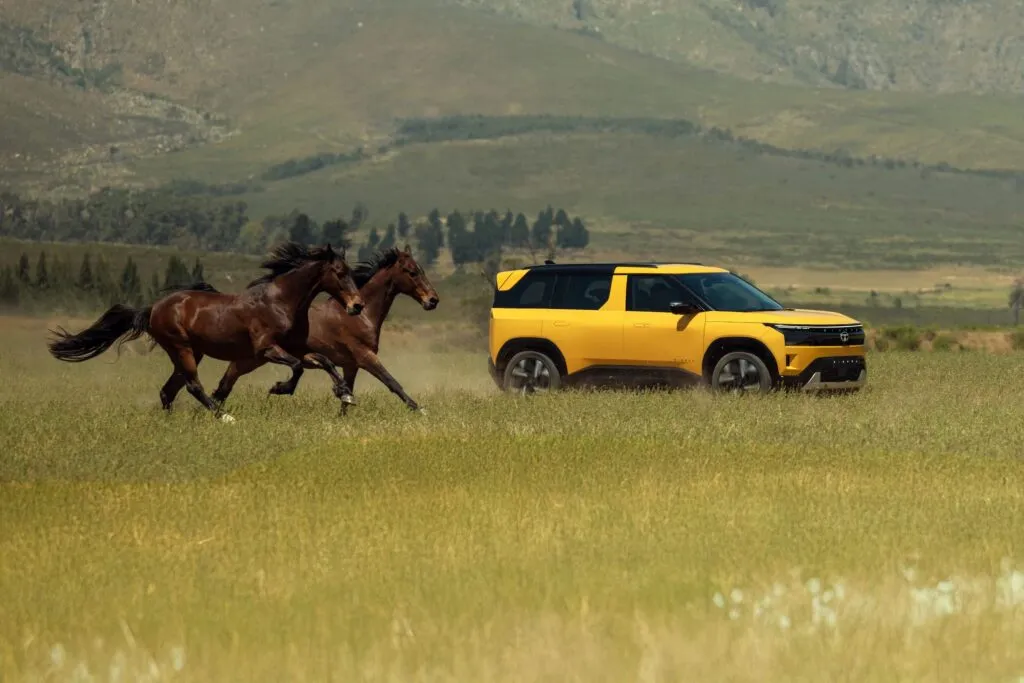
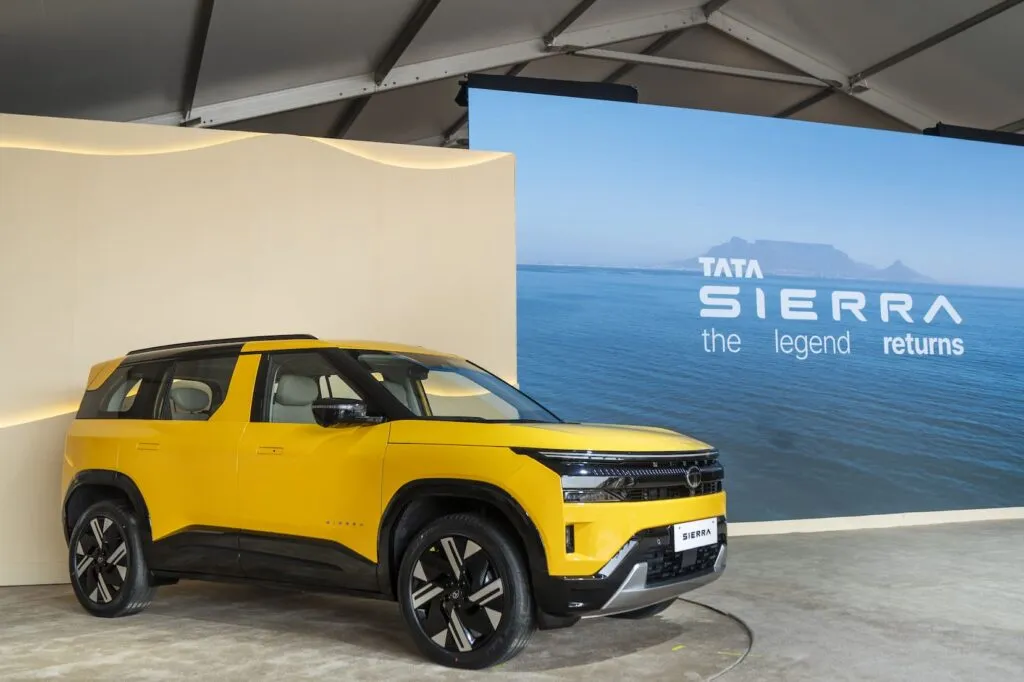
Now, decades later, Tata Motors has officially resurrected this legend, unveiling the production-ready version of the all-new Tata Sierra on the much-anticipated Sierra Brand Day on November 15, 2025. This is not merely an act of nostalgia but a bold re-interpretation of the Sierra’s soul, designed to lead the next chapter of the company’s design philosophy. Positioned strategically to bridge the gap in Tata’s SUV portfolio—sitting above the Curvv and below the Harrier—the 2025 Sierra blends its iconic heritage with cutting-edge technology and a modern, feature-rich cabin, positioning it as a serious contender in the highly competitive mid-size SUV segment.
The official market launch and price reveal are slated for November 25, 2025, with the new Sierra embodying the spirit of freedom, individuality, and exploration for a new generation of patrons. Dealerships have already commenced unofficial bookings, signalling high anticipation for this modern legend.
The Original Legend: The 1991 Tata Sierra
To truly appreciate the new Sierra, one must first look back at its trailblazing predecessor. The original Sierra, produced from 1991 to 2003, was a revolution for its time:
- Pioneer Status: It was the first proper SUV designed and built in India.
- Design & Layout: It featured a distinctive three-door body style and was based on the Tata Telcoline pick-up platform (Tata X2 platform). Its robust construction used heavy steel, including the bumpers, which contributed to its commanding presence and durable, off-road capabilities.
- Engine Performance: The first generation (1991–1997) was powered by a 2.0-litre (1,948 cc) 483 DL naturally aspirated four-cylinder diesel engine, which produced around 63 horsepower and was paired with a 5-speed G76 manual gearbox. Later, the introduction of a turbocharger resulted in the 483 DLTC inline-four engine that delivered a higher output of 87 horsepower, making it a respected performer for its era.
- Key Features: It offered features considered advanced for the early 90s, including power steering, power windows, and central locking. It was available in both rear-wheel-drive (RWD) and an electrically controlled four-wheel-drive (4WD) variant.
The original Sierra was a car that attracted a personality, setting a benchmark for what a premium, rugged Indian SUV could be. The new model seeks to capture that indomitable spirit while fearlessly embracing the future.
Design Philosophy: ‘Re-Interpretation of its Soul’
The new Tata Sierra has been crafted to be a “halo product”, one that respects its predecessor’s unmistakable silhouette while fundamentally redefining the modern Indian SUV.
Exterior Design: Characterful Stance and Iconic Silhouette
The exterior design is a clean, uncluttered re-interpretation of the original’s form, replacing complex ornamentation with smooth, purposeful surfaces.
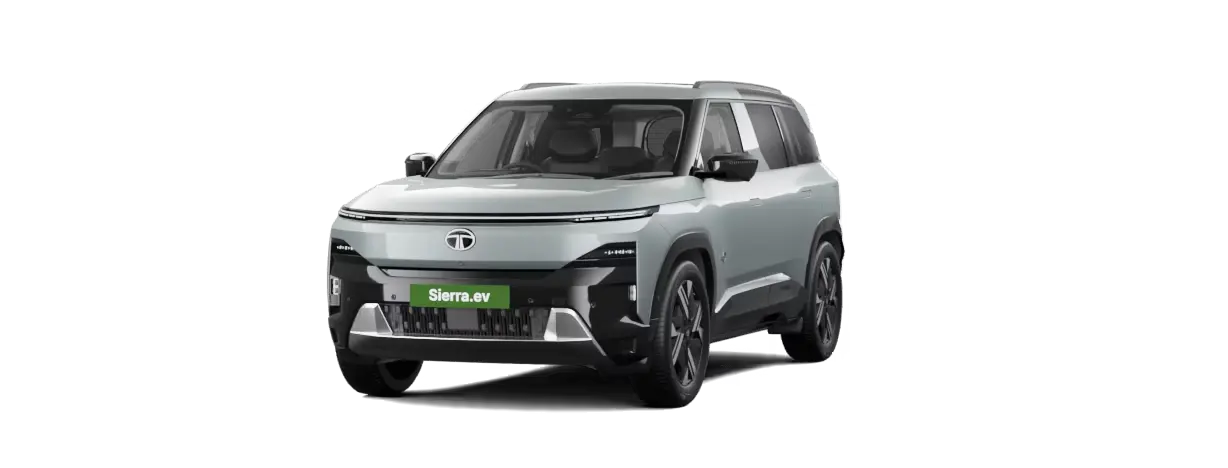
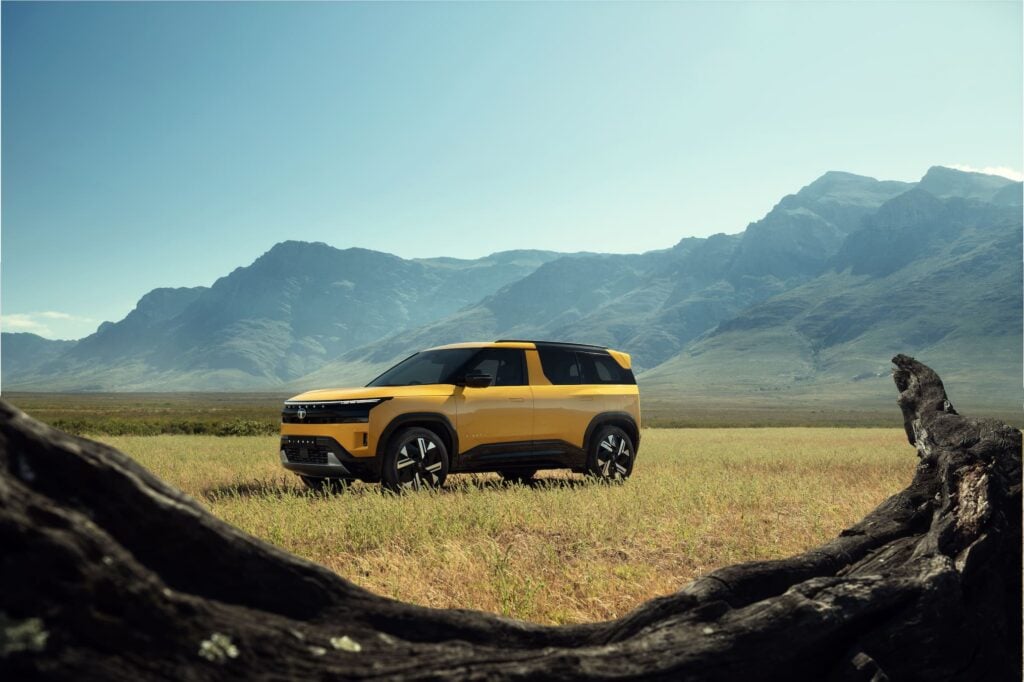
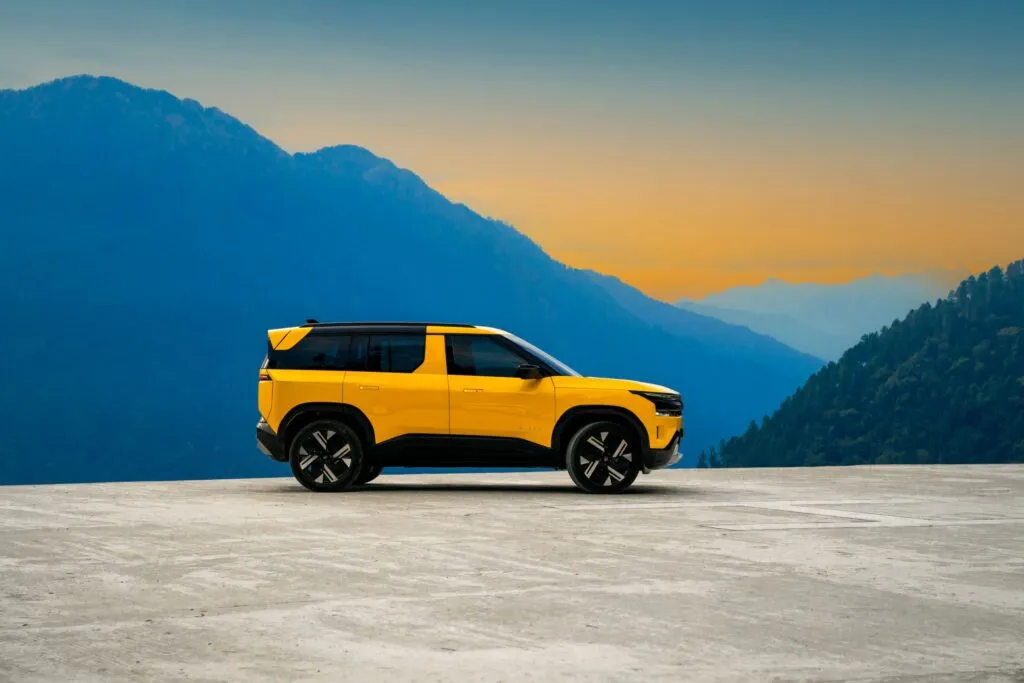
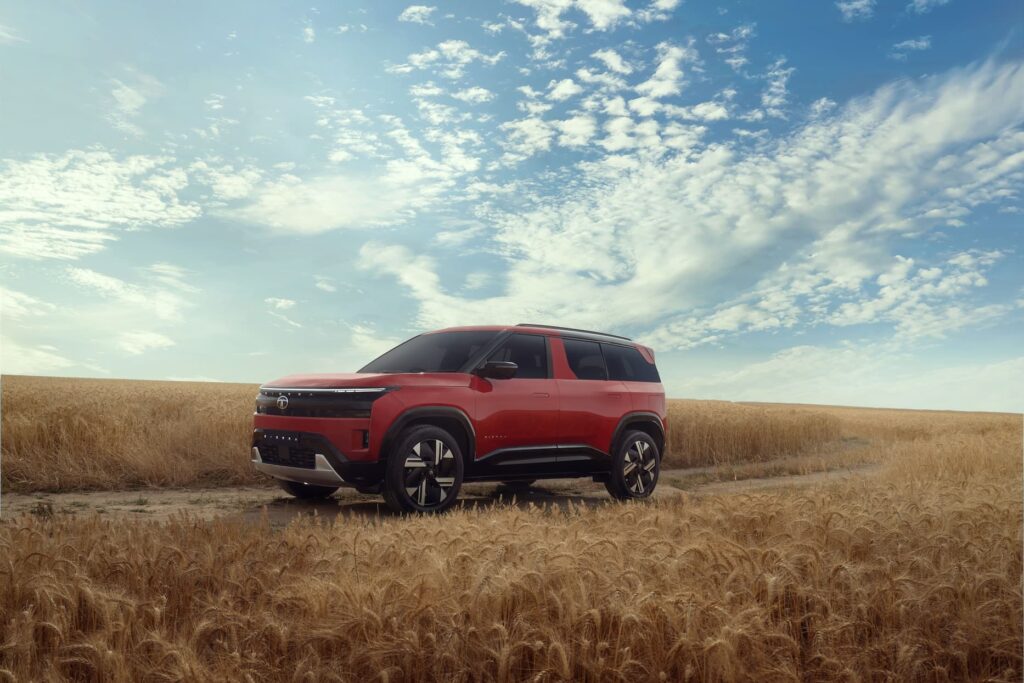
- Iconic Glasshouse Reimagined: The original’s signature three-quarter glasshouse has been modernised. It is now reimagined using a massive PanoraMax panoramic roof, combined with flush glazing and a black-painted roof finisher. This design choice is critical, as it maintains the ‘light, airy character’ of the original while adhering to contemporary safety and aerodynamic standards. The overall effect, coupled with wide rear haunches, creates a floating-roof effect that grants the Sierra a powerful, yet sophisticated road presence.
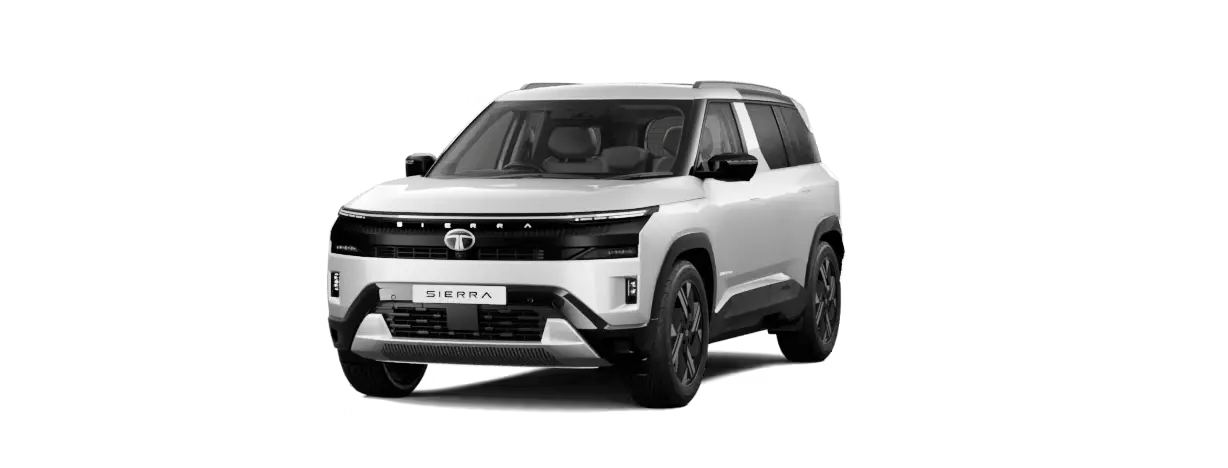
- The Light Saber Signature: The front fascia is dominated by the Light Saber, a full-width LED Daytime Running Light (DRL) that forms a seamless, single curve across the fascia. This distinct lighting signature is mirrored in the slim rear light bar, expressing technological precision and visual continuity.
- Proportion and Details: Its characterful stance is defined by upright proportions, a long wheelbase, and powerful shoulders. The look is completed with R19 alloy wheels, flush door handles, and gloss black cladding, establishing a confident and modern profile. The clamshell tailgate and hidden wipers also balance aesthetic purity with functionality.
Interior Design: The ‘Living Room Philosophy’
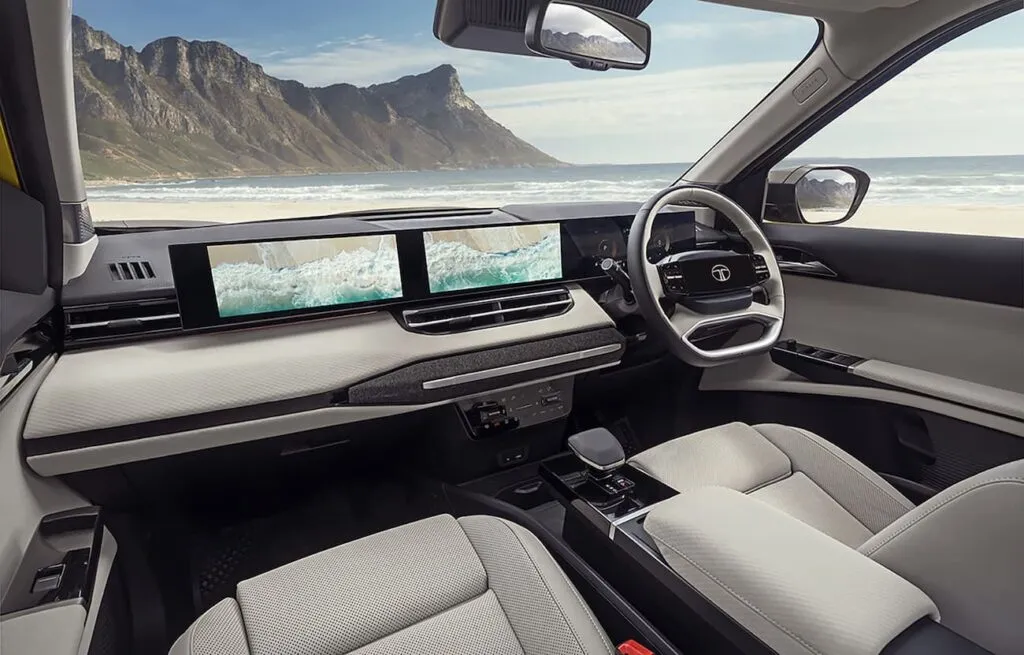
The cabin of the new Sierra is designed as ‘The Life Space,’ inspired by the concept of a shared lounge space—a literal ‘living room on wheels’ experience. The architecture is deliberately horizontal and calming to accentuate a sense of width and openness.
- TheatrePro and SonicShaft: The interior’s technical centerpiece is the TheatrePro multi-screen setup. This Horizon View screen layout is a first for Tata and integrates three digital displays: the driver’s instrument cluster, the central infotainment system, and a dedicated entertainment screen for the front passenger. This setup is paired with the SonicShaft Soundbar featuring a JBL Black 12-speaker system and Dolby Atmos, transforming the cabin into a serene, high-quality acoustic environment.
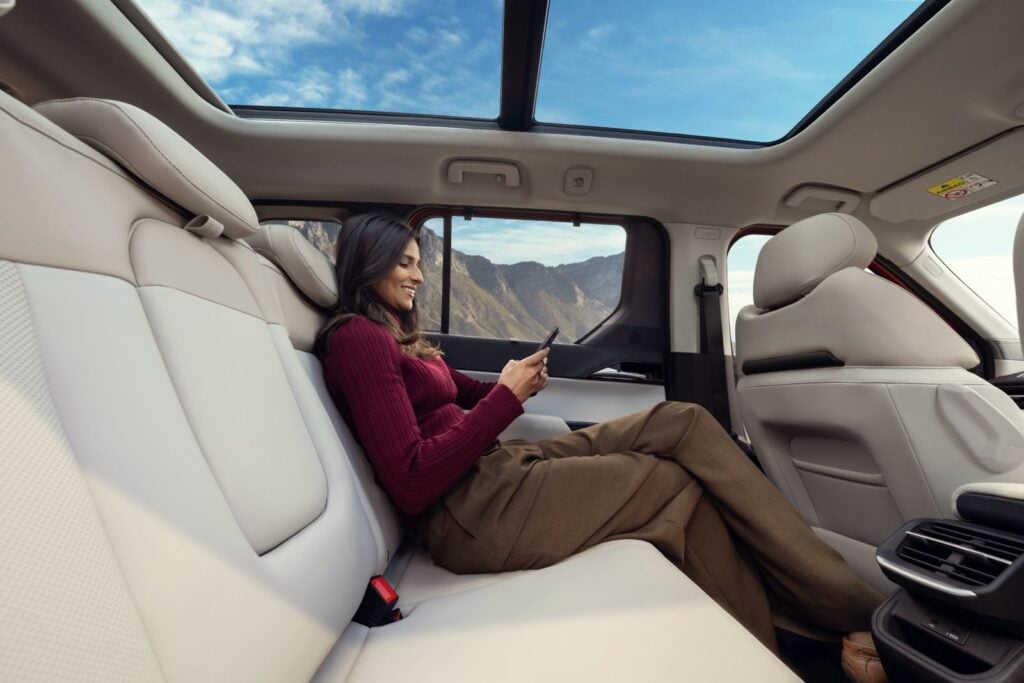
- Light and Space: The feeling of openness is recreated by the PanoraMax—the largest sunroof and surround-view glasshouse. Carefully curated materials, natural hues, subtle metallic accents, and ambient mood lighting flood the space, fostering a sense of warmth and serenity.
- Advanced Comfort Features: The feature list is extensive, expected to include Level 2 ADAS (Advanced Driver Assistance Systems), a 360-degree camera, wireless Android Auto and Apple CarPlay, dual-zone climate control, and both powered and ventilated front seats.
Technical Specifications and Powertrains
The 2025 Tata Sierra is built upon a new-generation monocoque SUV architecture. The ICE (Internal Combustion Engine) versions are expected to use the ATLAS platform (an evolution of the OMEGA Arc, derived from Land Rover’s D8), which also underpins the Harrier and Safari, ensuring a robust structure.
The Sierra will be offered with a highly diversified powertrain lineup to cater to various customer segments:
Internal Combustion Engine (ICE) Options
- Turbo-Petrol (New Debut): The Sierra is expected to debut Tata’s new 1.5-litre TGDi turbo-petrol engine (often called the Revotron).
- Output: Anticipated to produce approximately 170 hp (or 168 bhp) and 280 Nm of peak torque.
- Transmission: Expected to be paired with either a 6-speed manual or a 7-speed dual-clutch automatic (DCA) gearbox.
- Naturally Aspirated (NA) Petrol (Expected): A potential entry-level option, the 1.5-litre NA petrol engine, is anticipated to keep the starting price accessible.
- Output: Expected to generate around 115-120 hp and 140-150 Nm of torque.
- Turbo-Diesel (Proven Power): The diesel option is expected to be the familiar and proven 2.0-litre Kryotec diesel engine borrowed from the Harrier and Safari. Note: Other sources suggest the 1.5-litre diesel unit from the Curvv, with around 118 hp, is also expected.
- Output (2.0L Kryotec): Delivers 168 hp and 350 Nm of torque.
- Transmission: Available with both manual and automatic transmission options.
All-Electric (EV) Variant
Following the launch of the ICE models, the Sierra EV will arrive, built on Tata’s dedicated electric vehicle architecture, the Acti.EV platform.
- Platform & Drivetrain: The Acti.EV platform is flexible and is expected to support multiple battery pack options. The EV variant may also feature a dual-motor setup, providing an All-Wheel Drive (AWD) capability.
- Expected Range: The Sierra EV is anticipated to offer a claimed range of over 400 km to 500 km on a single charge, positioning it as a strong competitor in the electric SUV space.
Pricing, Positioning, and Competition
The Tata Sierra is a strategically important launch, designed to cement Tata Motors’ position in the fiercely competitive mid-size SUV market.
Market Positioning
The Sierra is being strategically positioned in the company’s lineup:
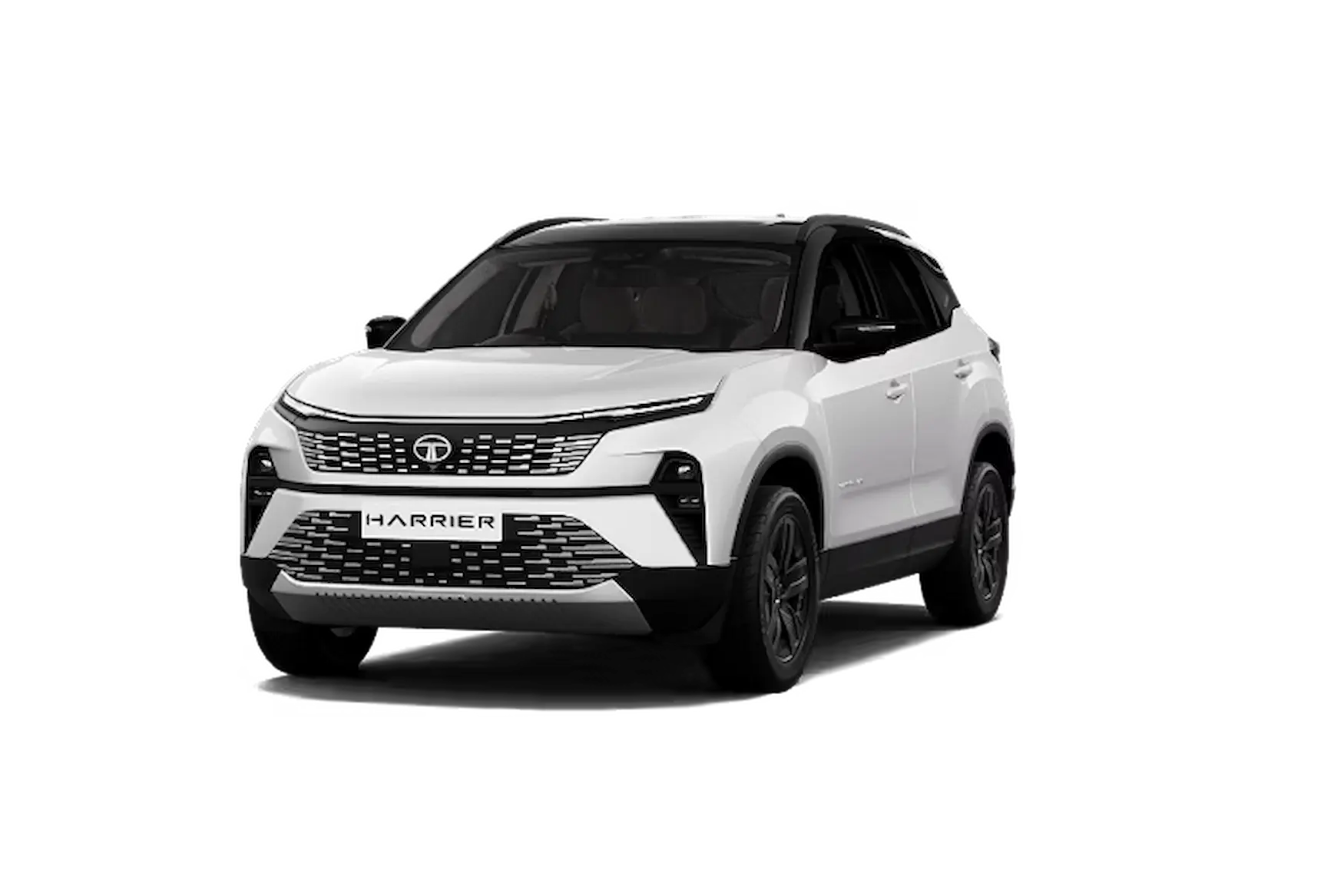
- Price Ladder: It will sit between the coupe-styled Tata Curvv and the flagship Tata Harrier/Safari.
- Target Segment: The Sierra’s unique blend of retro-modern design, boxy silhouette, and advanced features targets buyers looking for a distinctive, feature-packed alternative to the conventional compact SUV offerings.
Expected Price (Ex-showroom)
While the official pricing is yet to be announced (expected on November 25, 2025), market estimates suggest a highly competitive price bracket:
- ICE Variants: Expected to start from ₹11 Lakh to ₹15 Lakh for the base models and go up to ₹20 Lakh to ₹25 Lakh for the higher trims.
- EV Variants: The all-electric Sierra EV is anticipated to be priced between ₹20 Lakh and ₹30 Lakh.
Key Rivals
The Sierra’s price and feature set place it in direct competition with the segment leaders:
- Mid-Size SUV Rivals: Hyundai Creta, Kia Seltos, Maruti Suzuki Grand Vitara, Toyota Urban Cruiser Hyryder, and Honda Elevate.
- Internal Rivals: Tata Curvv and the larger Tata Harrier.
- Premium/Lifestyle Rivals: Due to its potential 2.0L diesel and premium features, it will also compete with higher-priced SUVs like the MG Hector Plus, Mahindra XUV700, and potentially the lower variants of the Jeep Compass.
Global Acclaim and Cultural Collaborations
The design excellence of the new Sierra has already received global recognition by winning the prestigious Red Dot Design Award in 2025. This award, judged by an international panel, reaffirms Tata Motors’ growing influence as a global design leader.
The unveiling of the production model was accompanied by a showcase of exclusive collaborations with leading Indian brands, reflecting the Sierra’s ethos of originality and self-expression. These partnerships weave a unique thread into the Sierra’s narrative, celebrating modern Indian creativity:
- Delhi Watch Company: A limited-edition timepiece (500 numbered pieces) that pays tribute to the SUV’s bold design, featuring details inspired by the B-pillar and hidden horse motif.
- DIVINE: The SUV co-stars in the artist’s latest track, “You & I,” blending rhythm, motion, design, and sound in a cultural statement of freedom and originality.
- Gully Labs: The collaboration features a Sierra-style upgrade to their flagship ‘Dvaita’ sneaker, fusing streetwear with the SUV’s design language, including a horse emblem and signature yellow heel patch.
- HUEMN: A capsule collection that distills the SUV’s DNA into wearable art, including T-shirts, jackets, and caps, celebrating audacity and the fearless pursuit of individuality.
- Nappa Dori: A collection of elegant and functional travel gear, inspired by the Sierra’s silhouette and earthy colour palette, crafted to age gracefully and reflect a legacy of thoughtful innovation.
- Starbucks: An exclusive tumbler featuring topographical line patterns and the SUV’s silhouette, symbolising shared journeys and mindful moments.
A Moment of Reckoning
The launch of the Tata Sierra is more than just a new product introduction; it is a moment of reckoning for the brand. It is a living symbol of Indian ingenuity and aspiration, designed to appeal to both buyers who cherished the original and a new generation seeking a blend of legacy, distinctive design, and cutting-edge technology.
As Martin Uhlarik, Vice President and Head of Global Design, Tata Motors, noted, “Reimagining a legend is not simply an act of nostalgia, it’s a testament to courageous design, innovation and the desire to create something that resonates across generations”. With its extensive feature list, diversified powertrain options (ICE and EV), and a starting price that positions it aggressively in the mid-size SUV segment, the new Tata Sierra is poised to be one of the brand’s most significant launches in recent memory. It has all the ingredients to potentially spark another “Nexon moment“, once again redefining Tata Motors’ trajectory in the Indian automotive landscape.
The world waits with bated breath for the official pricing and full technical reveal on November 25, 2025, as a legend truly returns to the horizon.
Tata Sierra
You can add more to this story by commenting below.