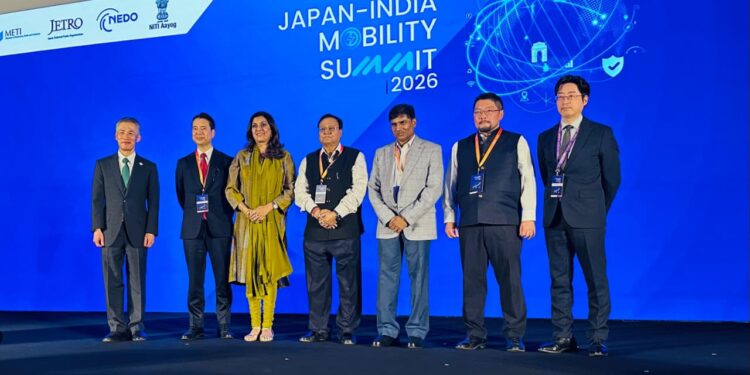
Japan-India Mobility Summit 2026: Accelerating Sustainable Transport Innovation
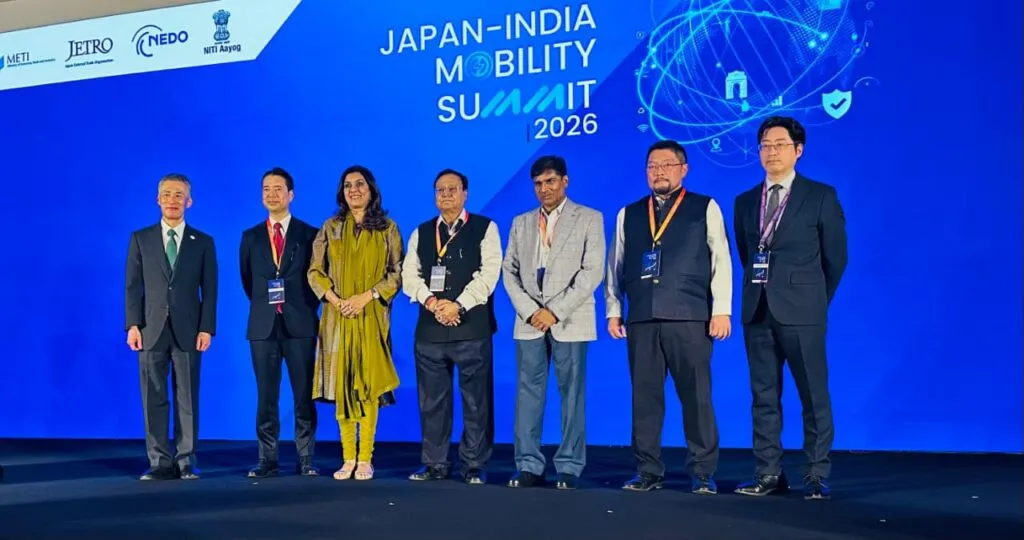
The Japan–India Mobility Summit 2026 (JIMS 2026), held on March 9, 2026, at the Taj West End in Bengaluru, marked a significant milestone in bilateral cooperation between the two nations. This high-level summit brought together policymakers, industry leaders, and technology innovators to advance a shared vision for the future of sustainable mobility.
The event was organized through the collaboration of Japan’s Ministry of Economy, Trade and Industry (METI), the Japan External Trade Organization (JETRO), and the New Energy and Industrial Technology Development Organization (NEDO). Key Indian partners included NITI Aayog and major industry bodies such as SIAM, ACMA, and CII.
Strategic Synergy: Technological Leadership Meets Scale
The summit highlighted the complementary strengths of both nations. Japan offers profound technological depth and engineering excellence, while India provides immense scale, a rapidly growing digital ecosystem, and ambitious manufacturing goals.
Dr. V. K. Saraswat, Honourable Member of NITI Aayog, emphasized that the partnership is moving beyond traditional infrastructure toward technology co-creation. This evolution focuses on integrating software, AI, and hydrogen mobility into a structural redesign of energy and industry.
Key Themes and Policy Frameworks
JIMS 2026 served to operationalize previous bilateral commitments made under two critical frameworks:
- Next-Generation Mobility Partnership (NGMP)
- Initiative of Clean Energy Mobility and Infrastructure for Next-Generation (ICEMAN)
The discussions focused on several core pillars of the evolving mobility landscape:
- Multi-Pathway Decarbonization: Exploring diverse solutions including Electric Vehicles (EVs), biofuels, green hydrogen, and Flex-Fuel Vehicles (FFVs).
- Digital and Smart Mobility: Advancing Software-Defined Vehicles (SDVs), Global Capability Centre (GCC) collaborations, and Mobility-as-a-Service (MaaS).
- Integrated Ecosystems: Strengthening startup and supplier partnerships to support the entire mobility value chain.
Karnataka: A Hub for Mobility Innovation
As the host state, Karnataka’s role was central to the summit’s objectives. Dr. S. Selvakumar, Principal Secretary for the Commerce and Industries Department, highlighted that the state houses over 800 R&D centers and a robust network of GCCs. With the introduction of the Clean Mobility Policy 2025–2030, Karnataka is positioned as a primary destination for Japanese industry leaders looking to deploy next-generation transport solutions.
A Diverse Approach to Carbon Neutrality
Mr. Keisuke Hosonuma of METI underscored Japan’s “multi-pathway strategy,” noting that carbon neutrality requires different solutions based on specific economic realities and consumer preferences. By aligning Japan’s technical expertise with India’s innovation potential, the summit aimed to convert bilateral intent into actionable, long-term industrial projects.
Frequently Asked Questions
What was the primary goal of the Japan–India Mobility Summit 2026? The summit aimed to accelerate bilateral cooperation in clean energy, digital mobility, and innovation, converting high-level intent into actionable industrial projects.
Which organizations were involved in organizing JIMS 2026? The event was organized by Japan’s METI, JETRO, and NEDO, in close collaboration with India’s NITI Aayog and supported by industry bodies like SIAM, JAMA, and ACMA.
What are the key themes of the Next-Generation Mobility Partnership? Key themes include multi-pathway decarbonization (EVs, hydrogen, biofuels), software-defined vehicles, and the integration of startup and supplier ecosystems.
Why is Bengaluru significant for this partnership? Bengaluru, and the state of Karnataka, serves as a major hub for mobility innovation with over 800 R&D centers and progressive policies like the Clean Mobility Policy 2025–2030.
What is the “multi-pathway strategy” mentioned at the summit? It is an approach to carbon neutrality that combines various technologies—including electrification, hybrids, and hydrogen—to meet the unique economic and policy needs of different markets.
You can add more to this story by commenting below.