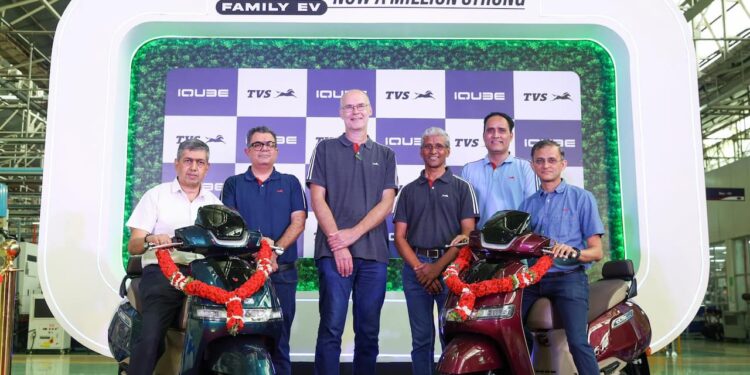
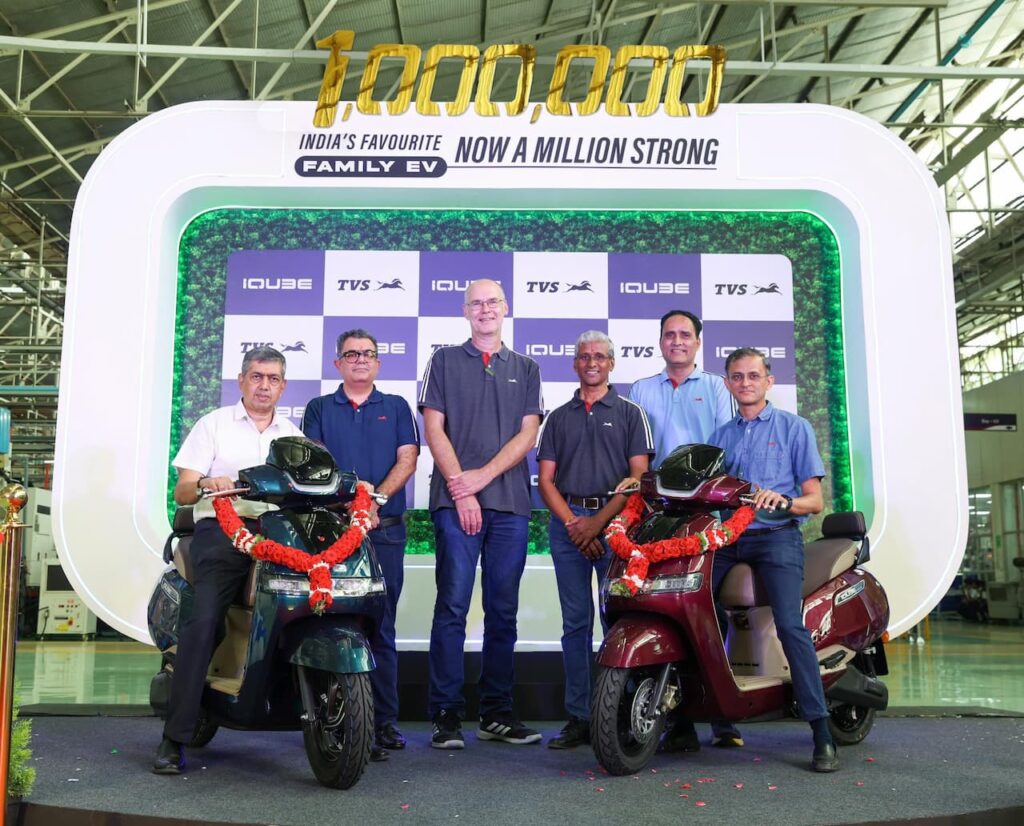
TVS Motor Company, India’s well-known two wheeler manufacturer, today announced the rollout of the 1 millionth TVS iQube electric scooter from its manufacturing facility in Hosur.
TVS Motor claims it has played an important role in shaping the category through sustained investments in in-house engineering, R&D, product innovation and ecosystem development. The company claims it has designed, engineered and manufactured in India for the world. TVS iQube is a very popular electric scooter model which Indian consumer has wholeheartedly accepted in a sea of EVs,
Commenting on the milestone, Sudarshan Venu, Chairman, TVS Motor Company said,
“The rollout of one million TVS iQubes reflects the scale at which electric mobility is becoming part of everyday life in India. The milestone is built on years of investment in engineering, innovation and manufacturing capabilities that have enabled us to build world-class electric mobility solutions designed and manufactured in India for the world. As India progresses towards the vision of Viksit Bharat, it has a unique opportunity to emerge as a global leader in the future of mobility. At TVS Motor, we remain committed to advancing this vision through exciting and sustainable mobility solutions that strengthen India’s position as a global mobility powerhouse.”
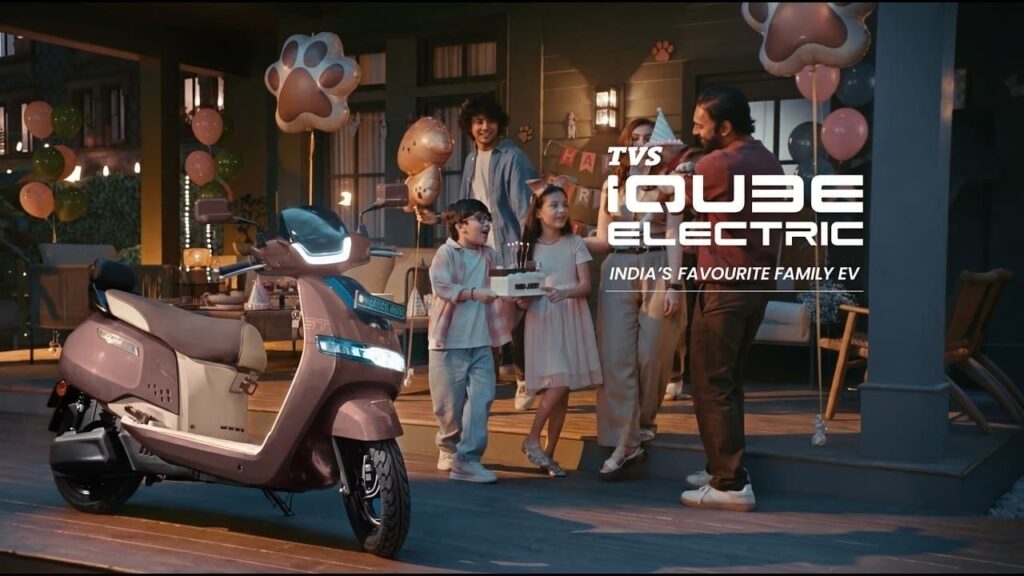
Since its launch in 2020, TVS iQube has grown into one of India’s most preferred electric scooter brands and the country’s favourite family EV. Built around the needs of Indian consumers, the portfolio has expanded across multiple battery capacities, range options and connected features, enabling customers to choose an electric scooter that best suits their mobility requirements. Supported by a robust sales and service network spanning over 3,300 touchpoints across more than 3,000 cities, alongside continuous investments in manufacturing and capacity expansion, TVS iQube has helped make electric mobility more accessible to customers across the country.
Frequently Asked Questions (FAQs)
1. What variants of the TVS iQube are available for purchase in 2026?
TVS has significantly expanded the iQube lineup to cater to various commuting needs and budgets. Currently, there are five main variants categorized by their battery capacity:
- iQube 2.2 kWh (Entry-level base variant)
- iQube 3.1 kWh
- iQube 3.5 kWh
- iQube S 4.7 kWh (Mid-tier premium variant)
- iQube ST 5.3 kWh (Flagship top variant)
2. What is the riding range of the base variant compared to the top variant?
The iQube lineup offers flexibility depending on how far you need to travel daily:
- Base Variant (2.2 kWh): Delivers a certified IDC range of 94 km on a single charge. This is perfect for standard city errands, dropping kids at school, and short office commutes.
- Top Variant (ST 5.3 kWh): Boasts a massive IDC range of 212 km per charge. This effectively eliminates range anxiety and is ideal for riders with long daily commutes or those who prefer the convenience of charging only once or twice a week.
3. How much do the base and top variants of the TVS iQube cost in 2026?
Pricing is structured to offer an accessible entry point as well as a fully loaded premium option. While exact on-road prices will depend on your city’s RTO, insurance, and specific state subsidies, the average ex-showroom pricing (including PM E-Drive subsidies where applicable) is as follows:
| Variant | Average Ex-Showroom Price (2026) |
| Base (2.2 kWh) | ~₹1.00 Lakh to ₹1.15 Lakh |
| Top (ST 5.3 kWh) | ~₹1.70 Lakh to ₹1.74 Lakh |
4. Is the cost of ownership actually lower compared to petrol scooters like the Jupiter or NTORQ?
Absolutely. Switching to an EV like the iQube drastically cuts down your daily running costs, making up for the initial purchase price over time.
- Petrol Scooters (Jupiter/NTORQ): Assuming petrol costs around ₹100/litre and the scooter yields an average mileage of 40-50 kmpl, your running cost is roughly ₹2.00 to ₹2.50 per km.
- TVS iQube: Depending on your local electricity tariffs, the iQube costs roughly ₹0.16 to ₹0.20 per km to charge.
The Bottom Line: If you ride 30 km a day, a petrol scooter costs about ₹2,000+ per month in fuel alone, while the iQube costs under ₹200 a month in electricity. Combined with lower maintenance costs (no engine oil changes, fewer moving parts), the savings over 3 to 5 years are substantial.
5. TVS recently rolled out its 1 millionth iQube—what does this milestone mean for a new buyer today?
Reaching the 1 million production mark in June 2026 is a massive indicator of product reliability and market trust. For a new buyer, this provides immense peace of mind:
- Proven Technology: The scooter’s battery, motor, and software have been road-tested by hundreds of thousands of users across nearly 15 billion kilometers. It is a mature product, not an experimental prototype.
- Robust Ecosystem: To support a million scooters, TVS has heavily invested in a widespread sales and service network (over 3,300 touchpoints). You won’t struggle to find spare parts or trained EV mechanics—a common pain point with newer, unproven EV startups.