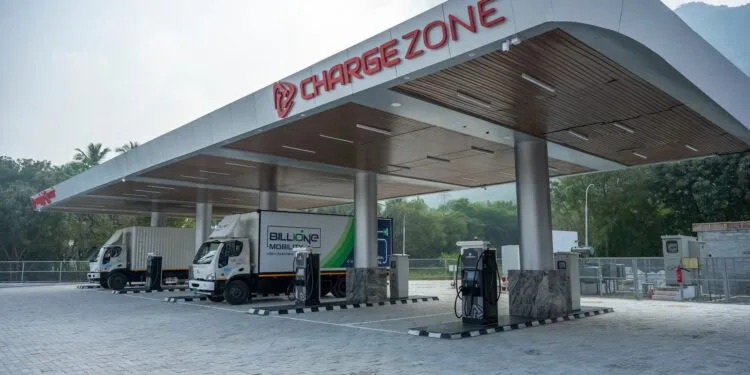
ChargeZone Announces Massive Expansion of India’s EV Supercharging Network
On March 31, 2026, CHARGEZONE announced a landmark initiative to significantly scale the nation’s high-speed charging infrastructure. The company aims to deploy more than 1,000 supercharging stations under a Dealer Owned, Company Operated (DOCO) franchise model by the end of fiscal year 2027. This strategic move is designed to address the growing demand for high-capacity charging as EV adoption moves beyond urban centers and into major highway corridors and freight routes.
The rollout is strategically aligned with the Government of India’s PM E-Drive initiative. By focusing on key national highway corridors, CHARGEZONE is building the necessary backbone to support both personal electric car owners and large-scale commercial EV movement. This expansion builds upon existing routes such as Delhi–Mumbai, Bengaluru–Hyderabad, Mumbai–Hyderabad, Delhi–Chandigarh, Bengaluru–Chennai, Vizag–Chennai, and Mumbai–Bengaluru.
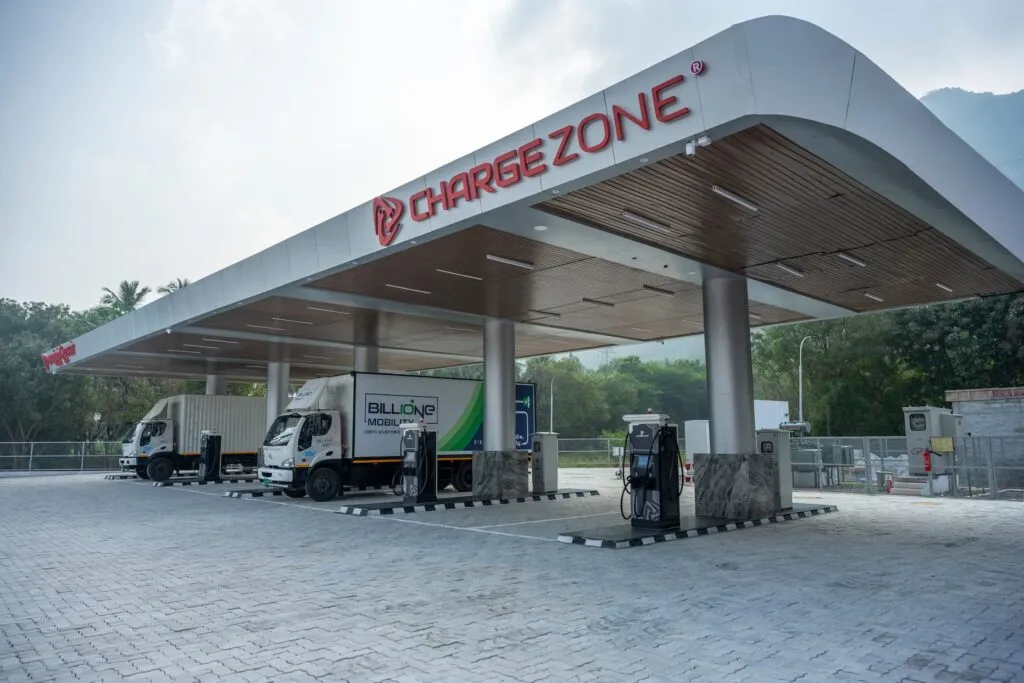
Understanding the DOCO Model: A New Asset Class in EV Infrastructure
The Dealer Owned, Company Operated (DOCO) model represents a shift in how EV infrastructure is funded and managed in India. This framework creates a new class of asset ownership, allowing a diverse range of stakeholders—including landowners, entrepreneurs, established businesses, and institutions—to participate in the green energy transition.
Under this arrangement, the investor provides the capital for the supercharging station, with projects typically starting from an investment of INR 1 crore. In return, CHARGEZONE takes full responsibility for the technical aspects of the project, including:
- Site development and engineering.
- Commissioning of the high-speed hardware.
- Ongoing day-to-day operations and maintenance.
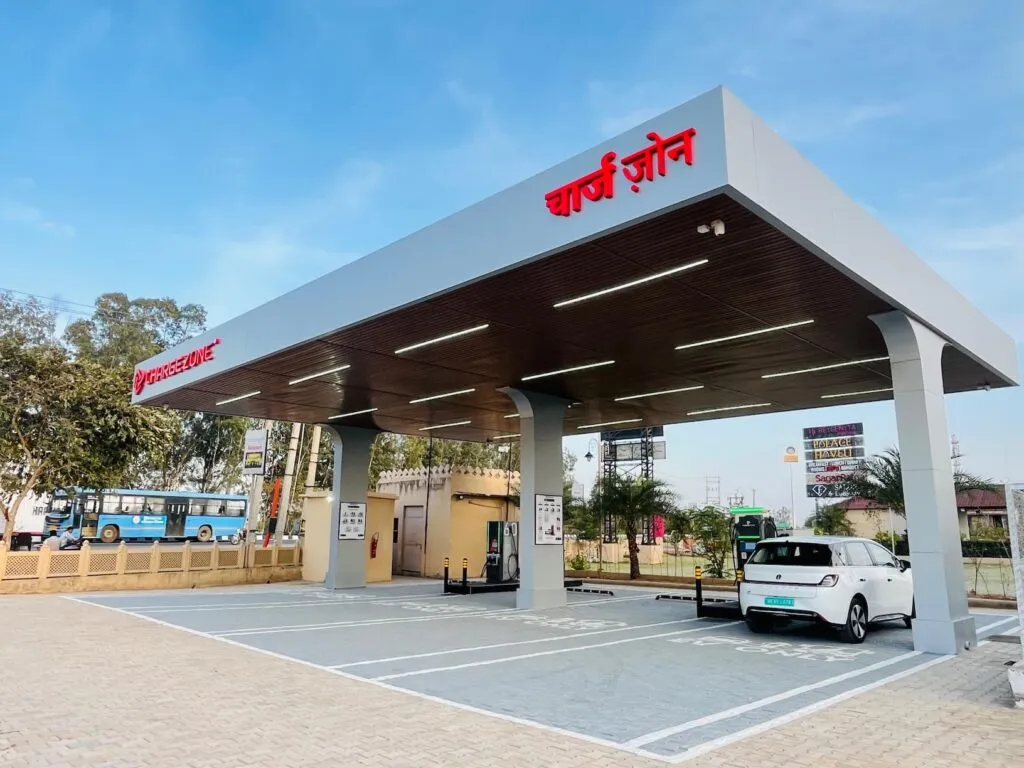
This model allows for rapid scaling by leveraging private capital while ensuring that the charging network remains consistent, reliable, and professionally managed by an experienced operator.
Strategic Financing with SBI and the EV Mitra Scheme
To lower the barrier to entry for prospective DOCO investors, CHARGEZONE has entered into a significant financing partnership with the State Bank of India (SBI). This collaboration operates under the EV Mitra scheme, providing structured financial solutions tailored specifically for EV infrastructure.
The financial framework offers substantial support for applicants, including:
| Feature | Details |
| Loan Range | ₹10 lakh to ₹10 crore |
| Repayment Tenure | Up to seven years |
| Credit Guarantees | Support via the Credit Guarantee Fund Trust for Micro and Small Enterprises (CGTMSE) |
| Investment Options | Full and partial co-investment opportunities within the DOCO framework |
These financial tools are essential for meeting India’s broader electrification goals, including the target of 30% electrification by 2030. With the PM E-Drive initiative earmarking ₹2,000 crore specifically for charging infrastructure, such public-private financing models are expected to be the primary drivers of growth.
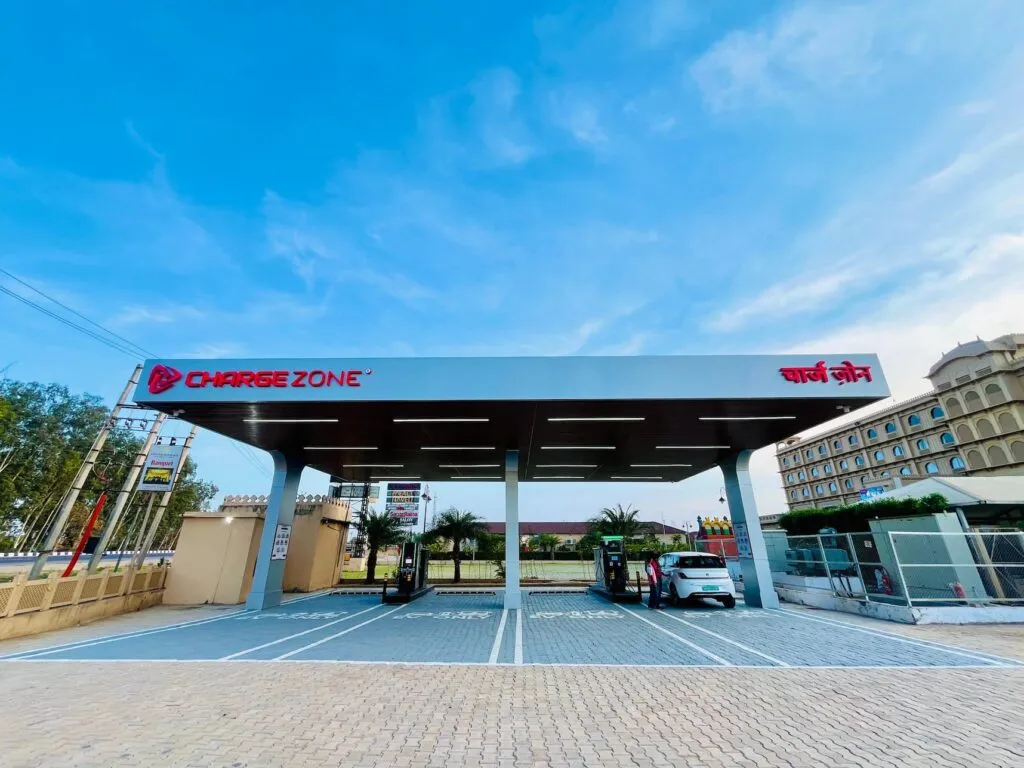
High-Performance Charging and Technical Capabilities
The new generation of stations will feature significantly higher charging capacities than standard public chargers. CHARGEZONE plans to deploy stations with capacities ranging from 500 kW to 1.5 MW. This high-power output is critical for reducing charging times for passenger cars and enabling the feasible long-distance movement of commercial EV trucks and buses.
The network is designed to be highly interoperable, supported by CHARGEZONE’s integrated technology and engineering capabilities. The company’s headquarters in Vadodara, Gujarat, oversees a network that already includes over 15,000 charging points across 1,200+ locations in India and the UAE. The ultimate mission is to establish one million charging points to fully realize India’s EV revolution.
Project E-DHARA: Integration of Renewable Energy
Sustainability is a core component of this rollout through Project E-DHARA (Electrifying and Decarbonizing Highways through Accelerated Renewable Adoption). This initiative ensures that the increase in charging infrastructure does not lead to a proportional increase in carbon emissions from the grid.
Project E-DHARA integrates several key technologies at each supercharging station:
- Solar Power: On-site renewable generation to supplement energy needs.
- Battery Energy Storage Systems (BESS): Storing renewable energy to manage peak loads.
- Grid Independence: By combining BESS with renewable generation, ChargeZone aims to ensure 100% uptime.
- Resilience: This approach eliminates dependence on local grid reliability, providing a consistent and clean charging experience even in remote highway areas.
Strengthening the Ecosystem through OEM Collaborations
The success of a massive charging rollout depends heavily on its compatibility with the vehicles on the road. CHARGEZONE has strengthened its infrastructure through growing collaborations with leading automotive Original Equipment Manufacturers (OEMs).
Key partners include:
- Tata.ev
- Hyundai and Volvo
- Luxury brands such as Audi, BMW, and Mercedes-Benz
- Market leaders like Maruti Suzuki and Toyota
- Emerging players like VinFast
These partnerships ensure that the 1,000+ new supercharging stations are perfectly aligned with the technical requirements of a wide range of EV models, facilitating a seamless user experience across both personal and commercial mobility segments.
Frequently Asked Questions (FAQs)
What is the DOCO model mentioned in the ChargeZone rollout? DOCO stands for Dealer Owned, Company Operated. In this model, an investor (the dealer) provides the capital and owns the asset, while ChargeZone handles the development, commissioning, and daily operations of the supercharging station.
How much investment is required to start a ChargeZone supercharging station? Projects under the DOCO franchise scheme start from an investment of approximately INR 1 crore.
What financing options are available for these EV stations? Through a partnership with the State Bank of India (SBI) under the EV Mitra scheme, eligible investors can access loans ranging from ₹10 lakh to ₹10 crore with a repayment period of up to seven years.
What is the charging capacity of these new stations? The supercharging stations are designed for high-speed performance, with charging capacities ranging from 500 kW to 1.5 MW, suitable for both cars and commercial trucks.
How does Project E-DHARA improve the charging network? Project E-DHARA integrates solar power and Battery Energy Storage Systems (BESS) into the stations. This ensures 100% uptime and reduces dependence on the power grid by using renewable energy.
Which highway corridors will see these new stations? The rollout targets major national highways, including routes like Delhi–Mumbai, Bengaluru–Hyderabad, Mumbai–Hyderabad, Delhi–Chandigarh, Bengaluru–Chennai, and others.
You can add more to this story by commenting below.