2026 Hyundai Verna Facelift HX 4 vs HX 6: Comprehensive Variant Comparison and Buying Guide
The recently launched Hyundai Verna facelift continues to hold its ground as one of the most premium mid-size sedans available in its segment. It brings a modern design, a feature-rich cabin, and versatile powertrain options to the table. With this recent update, Hyundai has revised its variant lineup. The 2026 Verna is now available in six distinct trims: HX 2, HX 4, HX 6, HX 6+, HX 8, and HX 10.
For many buyers, the base HX 2 trim might feel a bit bare bones. This naturally pushes consumers to look higher up the ladder, specifically at the one-above-base HX 4 and the mid-spec HX 6 variants. While the HX 4 adds several essential features that make it a worthy upgrade , the HX 6 promises a more premium experience without forcing buyers to stretch their budgets excessively.
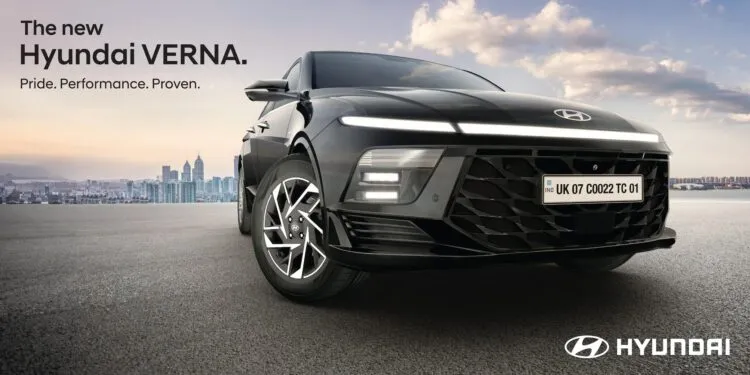
Hyundai Verna
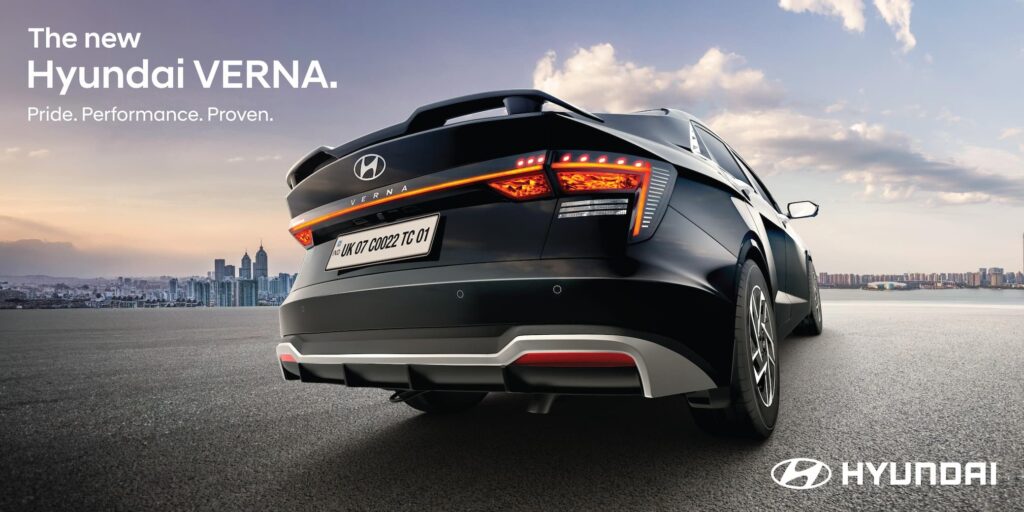
If you are planning to purchase the new 2026 Hyundai Verna and are confused between these two trims, this comprehensive guide breaks down the pricing, exterior design, interior features, safety equipment, and engine specifications to help you make an informed decision.
Price Comparison: Is the Premium Justified?
The first deciding factor for most car buyers is the price difference. Let us look at how the HX 4 and HX 6 stack up in terms of cost.
| Variant | Price |
| Hyundai Verna HX 4 manual | Rs 12.24 lakh |
| Hyundai Verna HX 6 manual | Rs 13.19 lakh |
| Hyundai Verna HX 6 CVT | Rs 14.4 lakh |
When comparing the manual versions of both variants side-by-side, there is a clear price difference of Rs 95,000. Additionally, it is important to note that the HX 6 introduces a Continuously Variable Transmission (CVT) automatic option, which the HX 4 lacks.
Exterior Design: Spotting the Differences
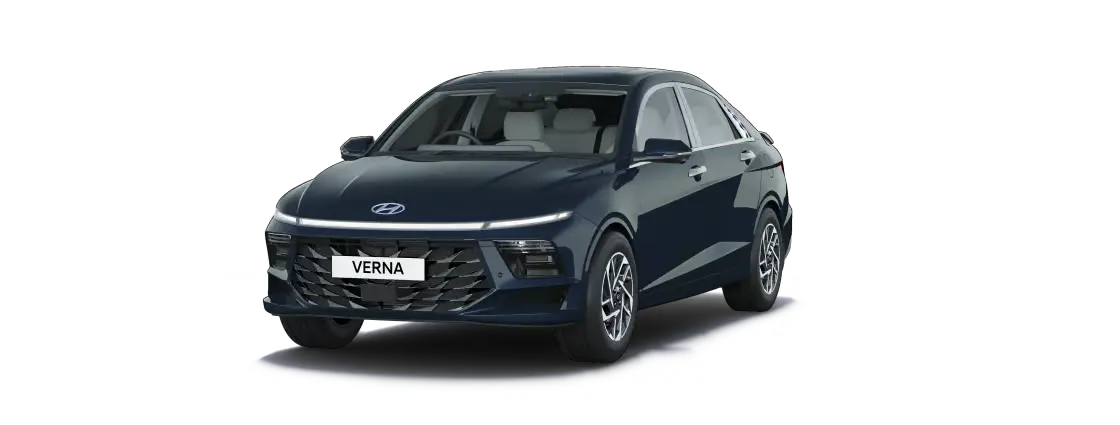
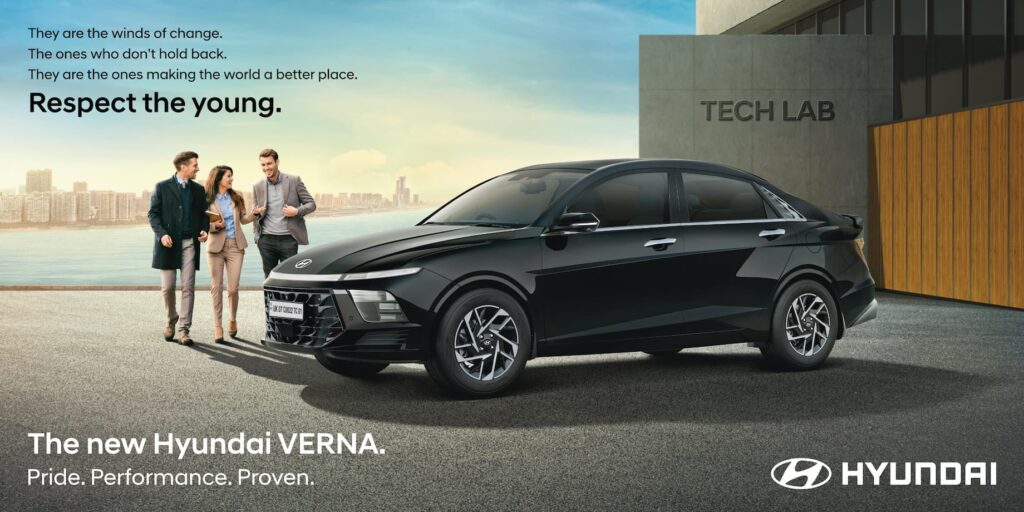
On the outside, the HX 6 looks noticeably more premium compared to the HX 4 trim. Hyundai has ensured that the extra money spent translates to visible aesthetic upgrades.
Here is what you get in both models:
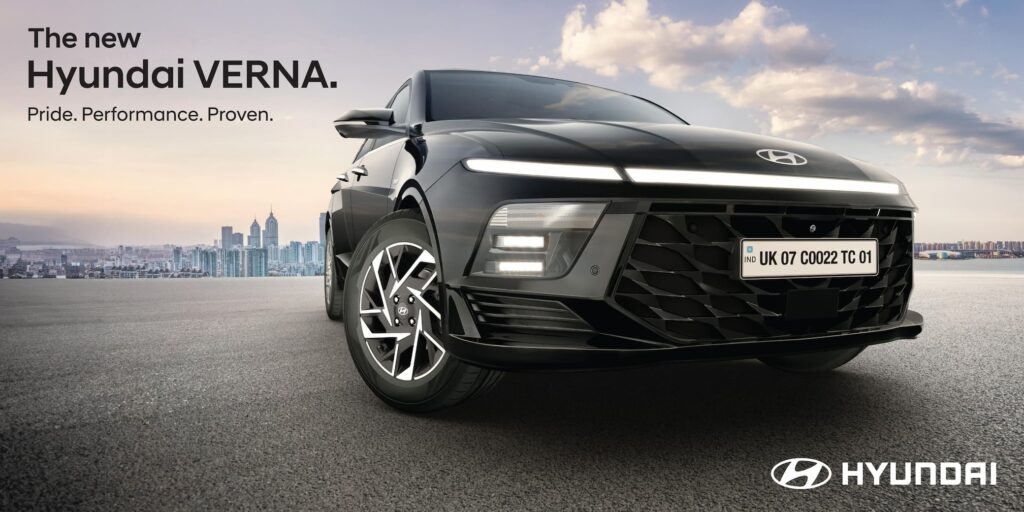
- Both variants feature connected LED DRLs that provide a highly premium look.
- Both cars are equipped with a shark-fin antenna.
- A rear spoiler and LED tail lamps are standard across both the HX 4 and HX 6.
However, the HX 6 adds the following distinct exterior upgrades over the HX 4:
- Headlights: The HX 4 comes with standard halogen projector headlamps, whereas the HX 6 receives an upgrade to dual LED projector headlights.
- Wheels: The HX 4 sits on 15-inch silver alloy wheels. In contrast, the HX 6 upgrades things with larger alloy wheels.
- Door Handles: The HX 4 utilizes standard body-coloured door handles.
Interior and Convenience Features: Comfort Inside the Cabin
Inside the cabin, both the HX 4 and HX 6 feature the same black-and-beige theme combined with fabric upholstery and a clean dashboard layout.
What the HX 4 Offers
The HX 4 is already a well-equipped variant for everyday use. It provides:
- An 8-inch touchscreen infotainment system complete with wireless Android Auto and Apple CarPlay.
- A single-pane sunroof to make the cabin feel airy.
- The new Hyundai Morse code steering wheel with telescopic adjustment.
- Rear AC vents and automatic climate control.
- A sliding front armrest with storage.
- Keyless entry and cruise control.
- A four-speaker audio setup.
How the HX 6 Upgrades the Experience
The HX 6 builds on the HX 4 package by adding several premium, convenience-focused features that elevate the in-cabin experience. For the extra premium, the HX 6 adds:
- Leatherette padding on the steering wheel and the gear knob.
- Rear adjustable headrests and rear sunshades.
- Electrically adjustable ORVMs featuring an auto-fold function.
- A smart opening boot (tailgate) for easier cargo access.
- Front tweeters to improve the audio experience.
- A wireless phone charger and ambient lighting to give the cabin a modern, upmarket feel.
- Push-button start/stop functionality.
Safety Features: Protecting You and Your Family
Safety remains a strong selling point for the Hyundai Verna, with a highly comprehensive set of standard features on both trims.
Both the HX 4 and HX 6 come standard with:
- Six airbags.
- ABS with EBD.
- Electronic Stability Control (ESC) and Vehicle Stability Management (VSM).
- Hill start assist.
- Rear parking sensors.
- ISOFIX child seat anchorages.
If you step up to the HX 6, Hyundai enhances safety and convenience even further by adding:
- A rear parking camera.
- Front parking sensors.
- An auto-dimming IRVM.
The addition of front parking sensors and a reverse parking camera in the HX 6 makes everyday driving significantly easier and more confidence-inspiring, especially when navigating tight city spaces or handling tricky parking manoeuvres.
Powertrain and Performance Specifications
Under the hood, both variants share the same engine but differ in transmission availability.
- Engine: Both the HX 4 and HX 6 are powered by a 1.5-litre NA (Naturally Aspirated) petrol engine.
- Power Output: The engine generates 115 PS of power.
- Torque: It produces 144 Nm of peak torque.
- Transmission Options: The HX 4 is strictly available with a 6-speed manual gearbox. The HX 6, however, gives buyers the choice between a 6-speed manual and a CVT (Continuously Variable Transmission) automatic.
Buying Insights: Which Variant Should You Buy?
Choosing between the HX 4 and HX 6 ultimately comes down to your budget constraints and daily driving requirements.
When to buy the HX 4: If you are strictly budget-conscious and are simply looking to upgrade from the bare-bones base variant, the HX 4 is a sensible choice that will not disappoint. It covers a large number of essential features, including a touchscreen infotainment system, a sunroof, cruise control, and automatic climate control, making it a highly practical daily driver.
When to buy the HX 6: If you have the financial flexibility to stretch your budget slightly, the HX 6 stands out as the more well-rounded and value-for-money option. For the additional Rs 95,000, you gain key exterior upgrades like LED projector headlights and larger alloy wheels, alongside comfort-enhancing interior features and added safety tech like front parking sensors and a rear camera.
Furthermore, the availability of a CVT automatic on the HX 6 heavily enhances its overall appeal, particularly for buyers who deal with heavy city traffic on a daily basis. The extra features offered in this variant are worth every penny, ensuring that buyers will not regret splurging on the extra amount. The HX 6 simply makes the most sense for the majority of buyers.
Frequently Asked Questions (FAQs)
What is the price difference between the Hyundai Verna HX 4 and HX 6? Comparing the manual transmission versions of both variants, there is a price difference of Rs 95,000, with the HX 4 priced at Rs 12.24 lakh and the HX 6 at Rs 13.19 lakh.
Does the Hyundai Verna HX 4 come with an automatic transmission? No, the HX 4 variant can only be had with a 6-speed manual gearbox. If you want an automatic (CVT) option, you must step up to the HX 6 variant.
What are the main exterior differences between the two trims? The HX 4 gets halogen projector headlamps, 15-inch silver alloy wheels, and body-coloured door handles. The HX 6 upgrades these to dual LED projector headlights and larger alloy wheels.
Do both the HX 4 and HX 6 variants have a sunroof? Yes, both the HX 4 and HX 6 variants come equipped with a single-pane sunroof to make the cabin feel more airy.
What extra safety features does the HX 6 offer over the HX 4? While both cars have 6 airbags, ABS, ESC, and rear parking sensors , the HX 6 further adds front parking sensors, a rear parking camera, and an auto-dimming IRVM.
Hyundai Verna
You can add more to this story by commenting below.