Hyundai Motor and TVS Motor Forge Strategic Partnership to Revolutionize India’s Electric Three-Wheeler Market
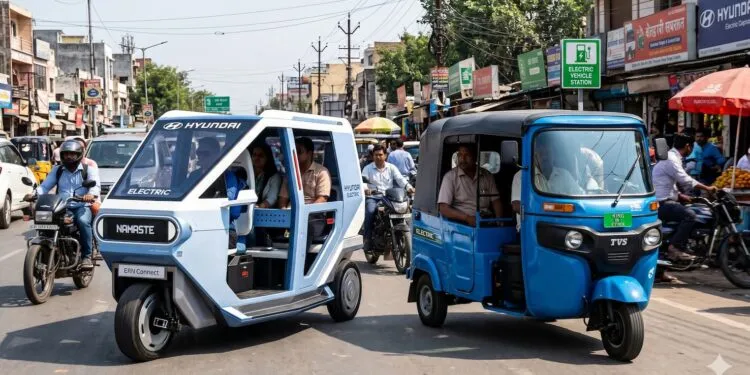
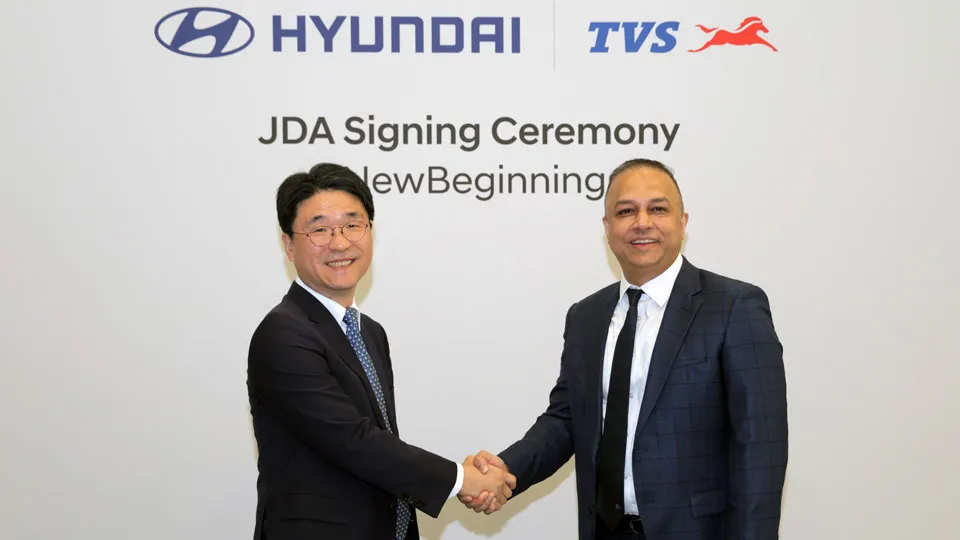
The landscape of Indian urban transportation is on the brink of a major transformation. Hyundai Motor Company and TVS Motor Company have officially signed a Joint Development Agreement to advance the development and commercialization of innovative Electric Three-Wheeler solutions. This landmark partnership is specifically designed to address the complex and rapidly evolving last-mile mobility needs of the Indian market and beyond.
By pooling their respective strengths, these two automotive giants are setting a new benchmark for sustainable urban transportation. The collaboration combines Hyundai Motor’s global expertise in cutting-edge electric mobility and human-centric design with TVS Motor’s deep-rooted understanding of the Indian consumer, its advanced electric platform, and its extensive three-wheeler engineering capabilities.
The Genesis of a Sustainable Vision
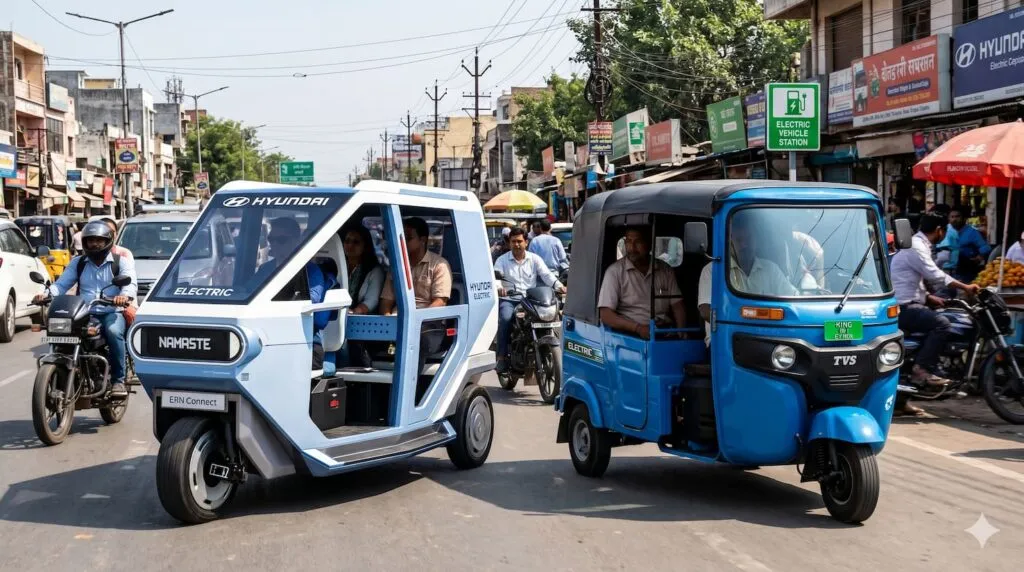
The foundation for this Joint Development Agreement was laid at the Bharat Mobility Global Expo 2025. Following a highly successful presentation of an innovative Electric Three-Wheeler concept, both companies recognized the immense potential of formalizing their collaboration. The overwhelming response at the expo underscored a clear market demand for robust, tailored mobility solutions that prioritize sustainability without compromising on performance or utility.
This partnership represents a significant leap forward in bringing specialized, purpose-built electric vehicles to Indian consumers. It also reinforces the shared commitment of both Hyundai Motor and TVS Motor to pioneer sustainable, zero-emission transportation solutions that cater to the unique infrastructure and environmental conditions of the region.
A Synergy of Global Innovation and Local Expertise
To ensure the success of this ambitious project, both companies have clearly defined roles that leverage their core competencies.
Hyundai Motor will take the helm in guiding the design and co-development of the electric three-wheeler. By tapping into its vast global research and development expertise, Hyundai will integrate advanced mobility technologies into the vehicle. A key focus for Hyundai will be applying its renowned human-centric design approach, ensuring that the final product offers unparalleled comfort, safety, and usability for both drivers and passengers.
On the other hand, TVS Motor will co-develop the product by utilizing its leading-edge electric vehicle platform and its extensive legacy in three-wheeler engineering. TVS Motor brings an unparalleled depth of local market knowledge to the table. Leveraging its long-standing reputation for trust and quality, TVS will spearhead the local sales and distribution network. Furthermore, TVS Motor’s manufacturing operations in India will serve as the production hub, catering primarily to the massive domestic demand while also preparing for future export opportunities to additional markets.
Leadership Perspectives on the Joint Development Agreement
The leadership teams from both organizations view this collaboration as a critical milestone in shaping the future of mobility.
Joongsun Ko, Senior Vice President of Corporate Strategy & Planning at Hyundai Motor Company, emphasized the strategic nature of the alliance: “Hyundai Motor Company has long explored ways to contribute to improving India’s transportation environment as a key market, and our collaboration with TVS Motor is a strategic decision rooted in that effort. We hope the co-developed electric three-wheeler enables broader access to safer and more sustainable transportation for people across the country.”
Echoing this sentiment, Sharad Mishra, President, Group Strategy at TVS Motor Company, highlighted the transformational potential of the partnership: “At TVS Motor Company, we aim to transform quality of life through sustainable and accessible mobility. The Joint Development Agreement marks an important step in our partnership with Hyundai Motor Company and advances our shared ambition to develop electric three-wheeler solutions. By bringing together complementary strengths – including our electric three-wheeler platform, engineering expertise, and deep understanding of customer needs – we are well-positioned to deliver purpose-built products for India and additional markets.”
Innovating for the Indian Landscape: Features of the Concept
The transition from a concept vehicle to a mass-market product requires addressing specific geographical and infrastructural challenges. The electric three-wheeler concept unveiled at the Bharat Mobility Global Expo 2025 was engineered specifically with India’s unique conditions in mind.
The finalized production model is expected to carry forward several of these innovative features:
- Adaptive Ground Clearance: Designed to navigate the notorious challenges of monsoon-affected roads and uneven urban terrain, ensuring a smooth and uninterrupted ride.
- Enhanced Safety Protocols: Incorporating global safety standards to protect both operators and passengers in dense traffic conditions.
- Ergonomic Design: Focused on reducing driver fatigue during extended commutes and long working shifts, which is typical for commercial three-wheeler operators.
- Advanced Thermal Management: A critical feature for the tropical Indian climate, ensuring battery efficiency and longevity even under extreme heat conditions.
- Flexible Interior Configurations: Recognizing the diverse applications of three-wheelers, the vehicle is designed for multiple use cases, seamlessly transitioning from passenger transport to goods delivery and even emergency services.
Driving Economic Growth Through Localization
A cornerstone of this joint venture is a steadfast commitment to localized manufacturing. Both Hyundai and TVS recognize that to achieve scale and affordability, the electric three-wheeler must be built using a highly localized supply chain.
Major components for the vehicle will be sourced and manufactured locally within India. This strategic approach yields multiple long-term benefits. Firstly, it significantly strengthens India’s domestic automotive supply chain ecosystem, aligning with national goals for self-reliance in manufacturing. Secondly, it creates substantial direct and indirect employment opportunities across the manufacturing and ancillary sectors. Finally, localization drastically reduces overall vehicle production costs while ensuring rapid after-sales support and the easy availability of spare parts for end consumers.
The Road Ahead: From Concept to Reality
The signing of the Joint Development Agreement formally transitions this project from the realm of concept exploration to concrete product development and eventual mass production. Both companies have already established dedicated cross-functional teams tasked with accelerating the development timelines and navigating the necessary regulatory approval processes.
Before hitting the roads, the new electric three-wheeler will undergo rigorous real-world testing, continuous localization refinement, and strict certification processes to ensure it meets and exceeds Indian regulatory standards and customer expectations.
Aligned with Hyundai Motor’s vision of “Progress for Humanity” and TVS Motor’s dedication to transforming quality of life through responsible mobility, this partnership is poised to deliver a vehicle that perfectly balances technology, affordability, sustainability, and safety. By targeting India, the world’s largest three-wheeler market, Hyundai and TVS are set to drive the sustainable change that the urban infrastructure of tomorrow desperately needs.
Frequently Asked Questions (FAQs)
What is the purpose of the partnership between Hyundai Motor and TVS Motor? Hyundai Motor and TVS Motor have signed a Joint Development Agreement to co-develop and commercialize purpose-built electric three-wheelers designed to address last-mile mobility and urban transportation needs in India and other targeted markets.
What specific roles will each company play in this joint venture? Hyundai Motor will lead the design and co-development of the vehicle, leveraging its global R&D expertise and human-centric design approach. TVS Motor will utilize its advanced electric platform and local engineering expertise, while also leading the local manufacturing, sales, and distribution in India.
Where was the concept for this electric three-wheeler first showcased? The electric three-wheeler concept that led to this partnership was successfully presented at the Bharat Mobility Global Expo 2025.
Will the components for the new electric three-wheeler be imported or made locally? A major cornerstone of this agreement is the commitment to localizing component manufacturing. Major components will be sourced and manufactured within India to strengthen the local supply chain, reduce costs, create jobs, and ensure the rapid availability of spare parts.
What are some of the key features expected in the co-developed electric three-wheeler? Based on the initial concept, the vehicle is expected to feature adaptive ground clearance for monsoon roads, enhanced thermal management for tropical climates, ergonomic design for driver comfort, enhanced safety features, and flexible interior configurations for both passenger and cargo transport.
You can add more to this story by commenting below.