Maruti Suzuki Achieves 3 Million Cumulative Vehicle Dispatches Through Railways: A Benchmark in Green Logistics
Maruti Suzuki India Limited recently announced a monumental achievement in its sustainable operations. The company has successfully dispatched over 3 million vehicles cumulatively using railway networks, establishing a new standard for green logistics in the automotive industry. This transition from traditional road transport to rail networks signifies a massive shift in how the automaker handles its outbound logistics, emphasizing lower fuel consumption and reduced carbon footprints on a national scale.
The Accelerated Journey to 3 Million Dispatches
Over the past decade, Maruti Suzuki’s reliance on rail transport for its outbound logistics has seen remarkable and consistent growth. In the financial year 2014-15, rail dispatch accounted for a modest 5.0% of the company’s total logistics share. By committing to sustainable freight movement, the company systematically scaled up this operational model year over year. Fast forward to FY 2025-26, this share has aggressively expanded to an impressive 26.5%.
The acceleration of this logistics transition is particularly noteworthy when analyzing the timeline of recent dispatch milestones. The progression from 2 million to 3 million cumulative rail-based vehicle dispatches was accomplished in a mere 21 months. This rapid 21-month period makes it the fastest million milestone ever recorded for Maruti Suzuki’s logistics operations, highlighting the efficiency of their scaled operations.
Strategic Investments in In-Plant Railway Infrastructure
To effectively support and maintain this massive shift toward rail transport, Maruti Suzuki has committed significant financial capital to upgrade its internal and external logistics networks. The company has pledged over INR 13,720 million dedicated specifically to the advancement of green logistics infrastructure.
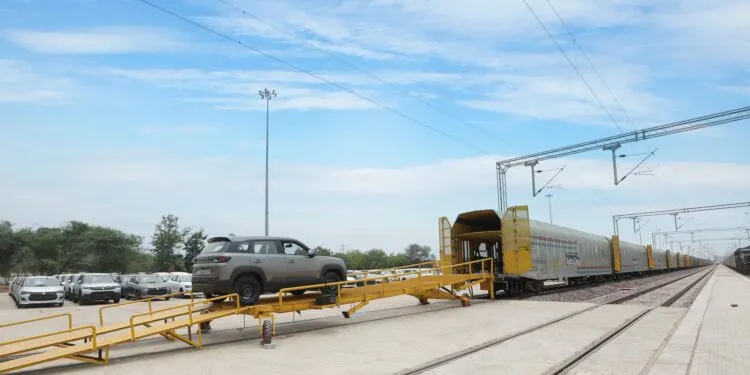
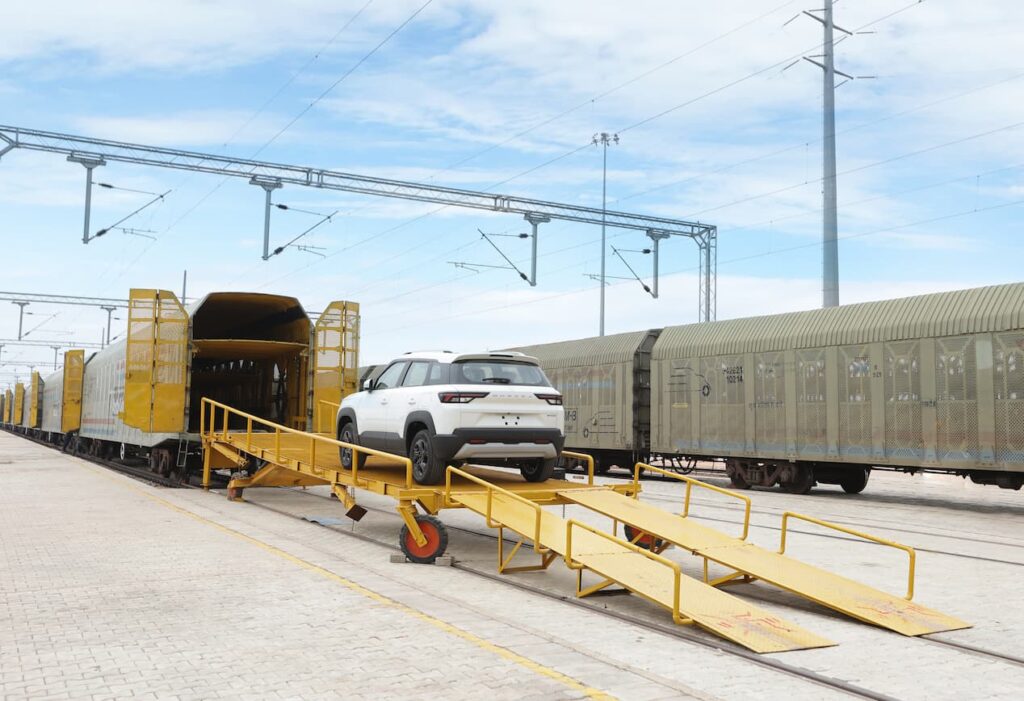
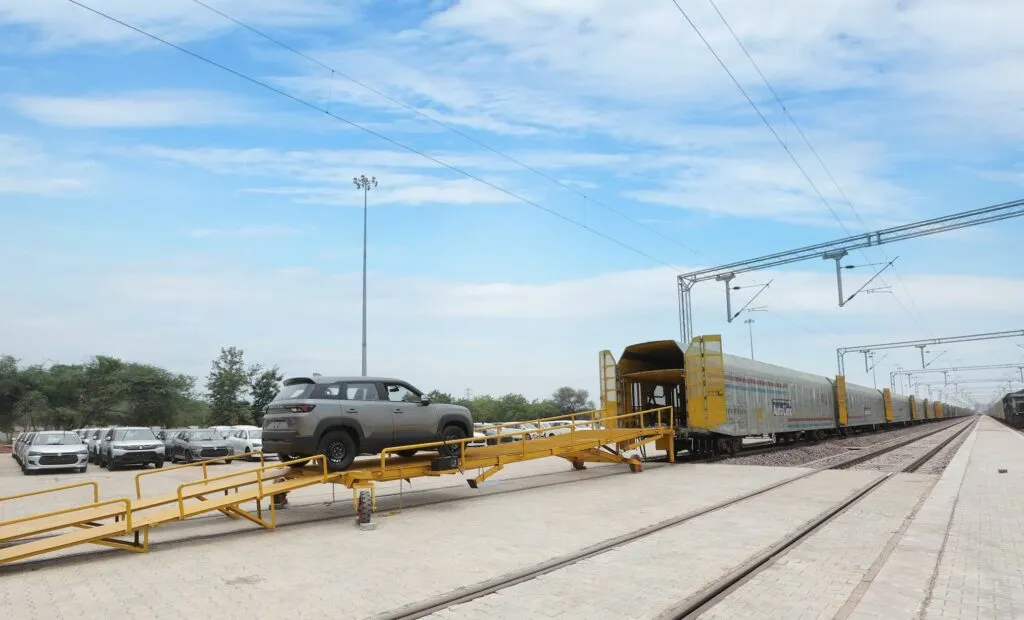
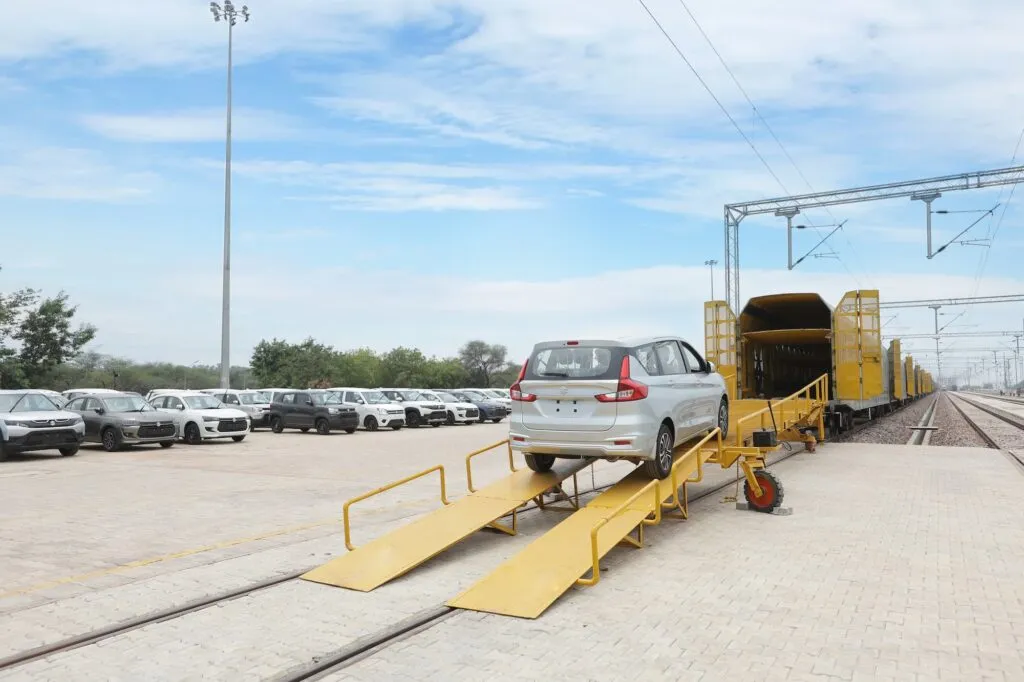
A core component of this large-scale investment includes the development of dedicated in-plant railway sidings at their primary manufacturing facilities situated in Hansalpur and Manesar. These dedicated sidings allow for the direct loading of newly manufactured vehicles onto specialized automotive rakes right at the source of production. The combined dispatch capacity of the Hansalpur and Manesar in-plant railway sidings currently stands at a robust 750,000 vehicles annually.
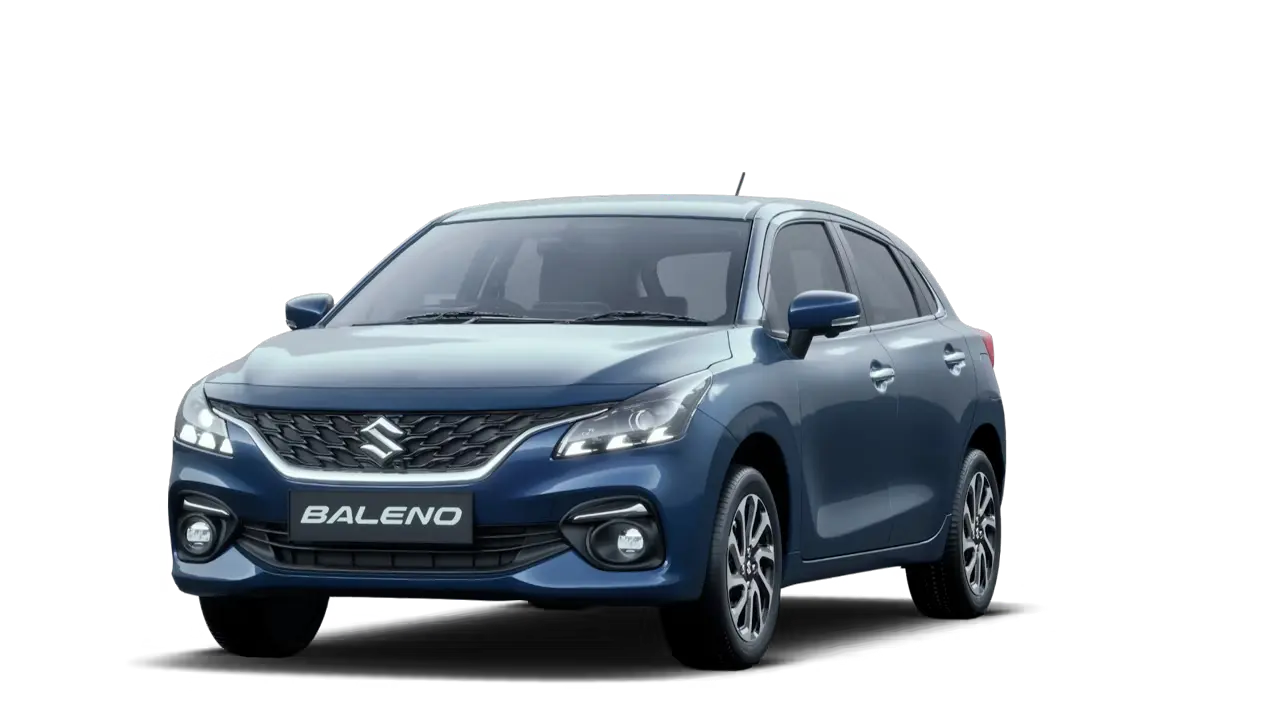
Through a highly organized hub and spoke model, these facilities service more than 600 cities across India, utilizing 22 different logistical hubs. Popular models such as the Dzire, Swift, Brezza, Grand Vitara, and Baleno are routinely transported through these channels. Additionally, crucial port locations like Mundra and Pipavav, which are utilized by Maruti Suzuki for international exports, are also seamlessly serviced by these integrated railway networks.
Aligning with the PM GatiShakti National Master Plan
The development and success of these in-plant sidings have been heavily supported by the Government of India’s progressive infrastructure initiatives. Specifically, these logistics projects were developed under the visionary PM GatiShakti National Master Plan.
According to Mr. Hisashi Takeuchi, Managing Director & CEO of Maruti Suzuki, this national framework has created a strong enabling environment for integrated and multimodal logistics. The GatiShakti master plan actively supports the wider automotive industry’s necessary transition toward rail-led, sustainable, and highly efficient freight movement, significantly reducing overall road congestion.
Milestones and Global Recognition for Green Logistics
Maruti Suzuki’s efforts have not only yielded operational efficiency for the brand but have also garnered prestigious international recognition for environmental sustainability.
In February 2026, a highly significant milestone was reached regarding the Hansalpur facility in Gujarat. The Hansalpur siding was officially registered as the World’s First Modal Shift Transportation Project. This prestigious registration was granted under the Verified Carbon Standard (VCS) Program by Verra, an internationally recognized carbon credit registry and certification body. This certification formally validates the substantial environmental benefits of shifting freight from road to rail.
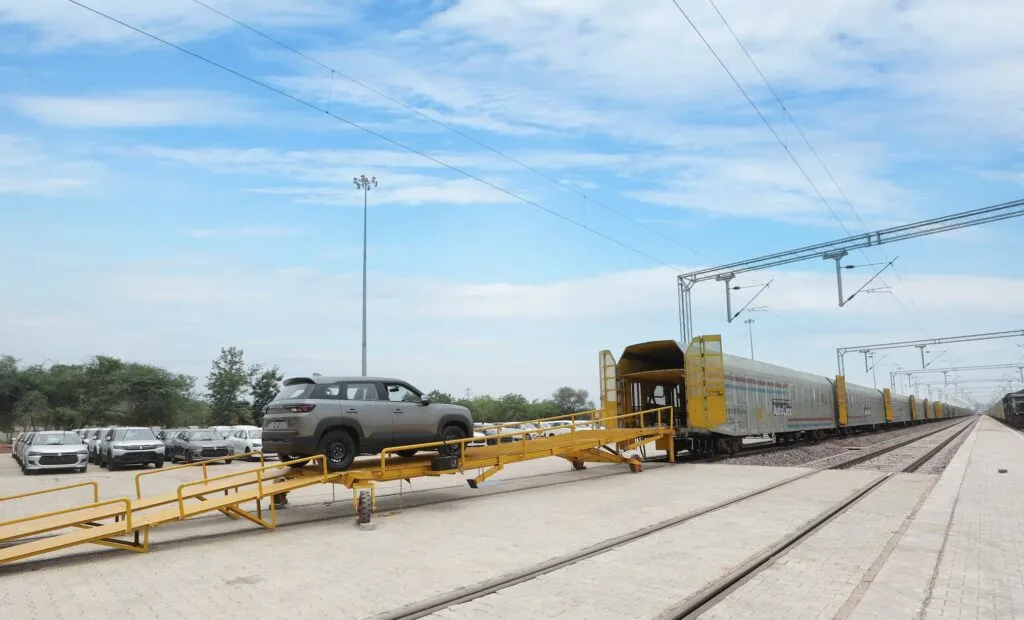
Other notable milestones in this journey include the commencement of the Hansalpur facility’s railway operations in March 2023, followed by its formal virtual inauguration by the Hon’ble Prime Minister of India, Shri Narendra Modi, in March 2024. Subsequently, the Manesar siding, which is India’s largest automobile in-plant railway siding, was inaugurated in June 2025.
Future Targets: Reaching 35% Rail Share by 2031
Looking ahead, Maruti Suzuki has outlined ambitious goals to further minimize its operational carbon footprint. The company aims to increase the overall share of its rail-based vehicle dispatches to 35% by the financial year 2030-31.
To achieve this extended sustainability target, the automaker has outlined concrete plans to establish an additional in-plant railway siding at its new manufacturing facility in Kharkhoda. By continually lowering fuel consumption, easing overall road congestion, and expanding dedicated rail infrastructure, Maruti Suzuki continues to pave the way for sustainable automotive logistics across the country.
Frequently Asked Questions (FAQs)
What is Maruti Suzuki’s current rail dispatch milestone? Maruti Suzuki has cumulatively dispatched over 3 million vehicles through railway networks.
How fast did the company move from 2 million to 3 million rail dispatches? The progression from 2 million to 3 million cumulative rail-based vehicle dispatches was attained in just 21 months, making it the fastest million for the company.
What is Maruti Suzuki’s target share for rail-based vehicle dispatches? The company aims to increase the share of rail-based vehicle dispatches to 35% by the financial year 2030-31.
Which manufacturing facilities currently feature in-plant railway sidings? Maruti Suzuki is currently the first and only passenger vehicle OEM in India to have a railway siding at two of its manufacturing facilities, specifically located in Hansalpur and Manesar. The company also plans to establish an in-plant siding at its new Kharkhoda facility in the future.
How much has Maruti Suzuki invested in green logistics infrastructure? Maruti Suzuki has committed over INR 13,720 million towards dedicated green logistics infrastructure, which includes the development of in-plant sidings, rail yards, and specialized automotive rakes.
What international recognition did the Hansalpur siding receive? In February 2026, the Hansalpur siding was officially registered as the World’s First Modal Shift Transportation Project under the Verified Carbon Standard (VCS) Program of Verra.
You can add more to this story by commenting below/.